Rochester Just Got a New Opioid Clinic. Here's Where New York's Settlement Billions Are Going.
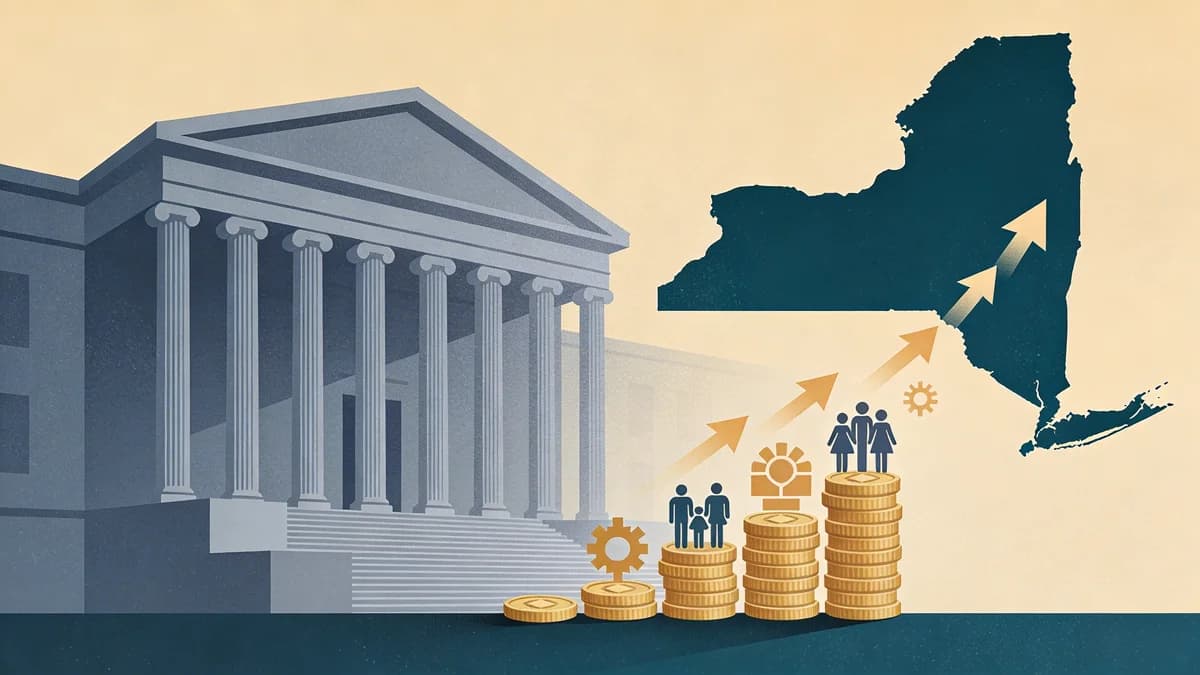
A new addiction treatment clinic opened in Rochester funded by New York's opioid settlement money — part of a $454 million effort that has made the state the top distributor of settlement funds in the country.
In November 2025, a nonprofit called Helio Health opened a new clinic in Rochester. It treats opioid use disorder. It offers medication, counseling, and referrals under one roof. And it was paid for by pharmaceutical companies.
Not directly, of course. The $760,000 that funded the Rochester program came from New York's share of the national opioid litigation settlements — the billions of dollars extracted from manufacturers and distributors that spent decades flooding the country with prescription painkillers while minimizing the risks. But the chain is direct enough: the companies that built the crisis are, through court-mandated payments, now funding some of the infrastructure to address it.
The Rochester clinic is one piece of a story that is larger, messier, and more contested than the press release announcing it suggests.
What Opened in Rochester
The new program is a Comprehensive Integrated Outpatient Treatment facility — a model OASAS has been actively funding across the state. The concept is straightforward: rather than requiring people to travel to multiple locations for different services, integrated programs put medication treatment, counseling, education, and referrals in one place.
For people managing addiction while also managing jobs, children, transportation barriers, and the stigma of walking into a clinic, that consolidation matters more than it might sound. The Rochester site, operated by Helio Health, includes an Opioid Treatment Program — which means it can prescribe methadone, a medication that under federal law can only be administered at licensed clinic sites.
OASAS Commissioner Dr. Chinazo Cunningham framed the opening in terms of access. "By providing a wide range of services in one location, including medication, we are making it easier to reach New Yorkers in need, and save lives," she said. "These programs reduce barriers that some people may face when seeking treatment."
The Scale of What New York Has Built
The Rochester clinic did not arrive in isolation. It is part of a systematic expansion that has made New York the most aggressive distributor of opioid settlement funds in the country — a distinction the state has leaned into publicly.
To date, New York has made more than $454 million available through its settlement fund, more than any other state. The money comes from a broader pool: through Attorney General Letitia James, New York secured over $2.5 billion in total settlements from manufacturers and distributors including Johnson & Johnson, McKesson, AmerisourceBergen, and Cardinal Health. Payments arrive annually over up to 18 years — meaning the full sum won't land for more than a decade.
OASAS controls roughly 40% of the state's allocation. The rest flows directly to counties and municipalities, which have their own discretion over how to spend it.
The 43-Program Buildout
The Rochester clinic is the latest in a specific initiative: OASAS has now funded 43 Comprehensive Integrated Outpatient Treatment programs across New York State, committing more than $17.7 million to their development — of which over $14.3 million came from the settlement fund. The programs are designed to address what researchers consistently identify as the biggest single barrier to treatment: the complexity of getting there.
What the Counties Are Doing With Their Share
Here is where the story gets more complicated. While the state's OASAS-managed portion of settlement funds comes with detailed public tracking — there is a searchable online tracker listing every initiative by date and amount — the county-level spending is a different picture.
New York Focus reported in January 2026 that counties have received over $330 million from opioid settlements over the past four years. How most of them spent it is, in many cases, unknown. A new state reporting mandate was supposed to change that, but advocates called it a missed opportunity: the requirements were too limited, the penalties for non-disclosure too weak, and the resulting data too sparse to be meaningful.
What did emerge from public records and voluntary disclosures was striking. Some counties spent their settlement money in ways that would be hard to square with the stated purpose of the litigation. Tasers. Virtual reality headsets. A baby shower.
The Transparency Problem
The opacity isn't accidental. County governments fought reporting requirements during the legislative process, and the final mandate reflected those objections. Drug policy advocates had pushed for detailed, publicly accessible breakdowns of every expenditure. What passed was significantly narrower.
The settlement agreements themselves do specify that money should go toward opioid abatement — treatment, prevention, harm reduction, recovery. But "opioid abatement" can be interpreted broadly, and without robust reporting requirements, enforcement is difficult.
The advisory board that oversees the state's settlement fund has raised its own concerns. In late 2025, board members publicly stated that the Hochul administration was not giving them adequate information about how funds were being allocated — a charge that created friction between the independent advisory body and the executive agencies it was meant to oversee.
Federal Uncertainty as a Backdrop
The expansion of settlement-funded programs is happening against a backdrop of federal instability that has made state-level investment feel more urgent. Through 2025, the Trump administration made repeated attempts to restructure Medicaid in ways that would have cut reimbursements for behavioral health services, including addiction treatment. Courts blocked the most aggressive proposals, but providers spent the year planning for scenarios that never quite materialized — a form of financial anxiety that is difficult to quantify but easy to observe in the decisions programs make about staffing and capacity.
New York's settlement fund — structured as a dedicated, multi-year stream rather than an annual appropriation — offers something that federal Medicaid dollars don't: predictability. That predictability is part of why advocates pushed so hard for the fund's creation, and why the transparency fight over how counties spend their share matters beyond the immediate question of accountability.
The Argument for This Model
The Comprehensive Integrated Outpatient model that Rochester's new clinic represents is not just a delivery mechanism. It reflects a view about what addiction treatment should look like: not a series of separate appointments at separate locations, but a coordinated system that meets people where they are and reduces the administrative burden of getting well.
That burden — the appointments, the prior authorizations, the travel, the multiple providers — is not a minor inconvenience for people in active addiction. It is often the difference between beginning treatment and not.
Whether 43 programs across a state of 20 million people is enough is a different question. The waiting lists at many existing programs suggest it is not. But each new clinic that opens represents, for some number of people in its catchment area, the difference between having somewhere to go and not having one.
For Helio Health in Rochester, that number is now real. The clinic is open.
Written by
MTNYC Editorial TeamThe MTNYC Editorial Team is a group of healthcare writers, researchers, and addiction specialists dedicated to providing accurate, compassionate, and evidence-based information about addiction treatment and recovery resources in New York State.