Federal Medicaid Probe Threatens Coverage for 1.7 Million New Yorkers — Including Those Seeking Addiction Treatment
CMS accuses NY of widespread fraud and gives Hochul 30 days to fix the system or face deferred payments. Here's what's at risk for people who rely on Medicaid for substance use treatment.
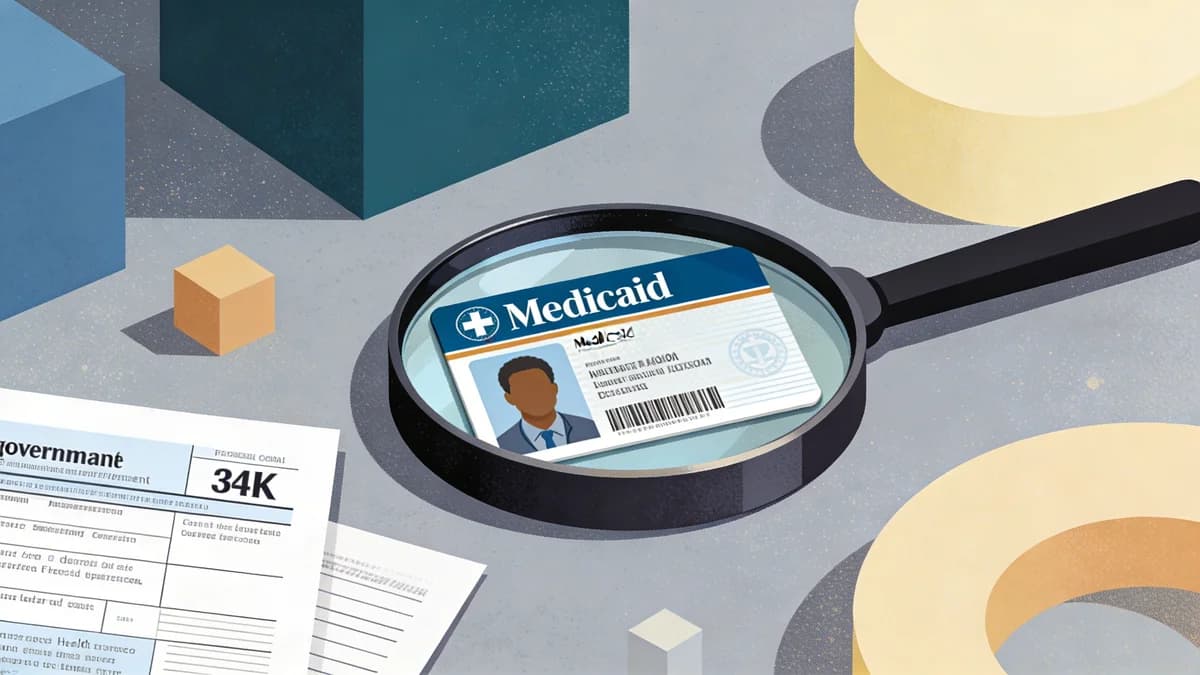
On Tuesday, March 4, the Centers for Medicare and Medicaid Services sent a letter to New York Governor Kathy Hochul accusing the state of widespread fraud and abuse in its $124 billion Medicaid program. CMS Administrator Dr. Mehmet Oz gave New York 30 days to submit a corrective action plan—or face deferred federal payments.
One day later, the New York Post reported that the Department of Justice is preparing to file a lawsuit against Hochul's administration over alleged bid-rigging in the state's $11 billion Consumer Directed Personal Assistance Program (CDPAP).
For the 1.7 million New Yorkers who rely on Medicaid-funded coverage through the state's Essential Plan—and the hundreds of thousands more who access substance use treatment through traditional Medicaid—this isn't abstract bureaucratic theater. It's a direct threat to their ability to get care.
Two Investigations, One Target
The CMS probe centers on allegations that New York's Medicaid spending has ballooned without adequate oversight. In an accompanying video announcement, Dr. Oz said the investigation is "not about politics. It's about protecting patients and protecting taxpayers."
But timing matters. The investigation comes less than a week after CMS froze nearly $260 million in Medicaid funding in Minnesota over similar accusations. Critics see a pattern: blue states with high Medicaid enrollment are facing heightened scrutiny under the Trump administration.
Governor Hochul didn't mince words. "Looking at Democratic-only states and questioning what we do for their own political reasons, I will have to stand up and show them the truth and show them the facts that they're wrong," she said Wednesday at a press conference in Albany.
The DOJ lawsuit adds another layer of pressure. According to multiple reports, the suit will allege that Hochul's administration pre-selected Public Partnerships LLC (PPL) to administer CDPAP before the bidding process even began. Evidence released by State Senators James Skoufis and Gustavo Rivera last summer showed draft legislation that explicitly named PPL as the contractor—before lawmakers had approved the bidding framework.
PPL initially denied any pre-bidding communication with the state, then later amended its testimony to acknowledge "general" conversations did take place. The company maintains the process was "routine and lawful."
What's at Stake for Addiction Treatment
New York's Medicaid program is the single largest payer for addiction treatment in the state. Medicaid covers:
- Medication-assisted treatment (methadone, buprenorphine, naltrexone)
- Outpatient counseling and therapy
- Intensive outpatient programs (IOPs)
- Residential treatment
- Detoxification services
- Naloxone distribution and harm reduction programs
If CMS follows through on its threat to defer payments, providers could face delayed reimbursements—or worse, lose funding entirely. That would force programs to cut services, limit patient intake, or shut down operations.
The Essential Plan, which covers 1.7 million New Yorkers with incomes below 250% of the federal poverty line, is particularly vulnerable. The state has asked CMS to approve a waiver that would allow New York to tap into a federal trust fund to maintain coverage for over 450,000 legal noncitizens after changes in President Trump's H.R. 1 tax plan disqualified them from federal health aid.
Hochul insists the investigation won't affect that waiver decision. "No, that should not be a connection to any of this," she said. But with two federal agencies now targeting the state, that confidence may be premature.
The CDPAP Controversy
CDPAP is a Medicaid home care program that allows patients to hire and train their own caregivers—often family members. It's popular because it gives patients more control over their care, and it has been particularly important for people with behavioral health needs, including those in recovery from substance use disorders.
In an effort to save money, Hochul reduced the number of fiscal intermediaries managing CDPAP payroll from hundreds to just one: Public Partnerships LLC. The administration claims the reform has saved over $1 billion (some reports say $2 billion).
But the process by which PPL won the contract has been under fire for months. Emails obtained by lawmakers show that state officials and PPL discussed the contract before the bidding process started. A PPL official initially testified under oath that no pre-bidding communication occurred, then later walked back that claim.
"Every indication points to an award that was pre-determined from the start," Senator Skoufis said in a statement. He has proposed a state constitutional amendment that would require comptroller approval for high-dollar contracts.
The DOJ lawsuit, expected to be filed in the coming weeks, will likely hinge on whether the state engaged in procurement fraud and whether PPL violated consumer protection and Medicaid fraud laws.
Hochul's Defense
The governor's office released a statement defending its record. "Before the Trump administration even took office, Governor Hochul was leading efforts to root out waste, fraud and abuse—including sweeping CDPAP reforms that shut down hundreds of wasteful Medicaid middlemen and saved over $2 billion for state and federal taxpayers while protecting home care for those who need it."
Hochul pointed to previous collaboration with federal investigators, including a successful DOJ probe that led to criminal charges against Medicaid fraudsters. "When there is fraud, I will help them fight it," she said. "I already have."
The Department of Health also emphasized its partnership with the state Medicaid Inspector General and the comptroller's office to identify and prosecute criminal activity. "New York's Medicaid programs are a lifeline for millions of people who depend on them for access to critical care," a DOH spokesperson said. "While some in Washington want to score political points at the expense of vulnerable New Yorkers, they should instead look to us as a model for how to improve these programs."
Why Addiction Treatment Providers Should Pay Attention
For rehab centers, outpatient clinics, and medication-assisted treatment programs, this investigation is a warning shot. Medicaid reimbursement delays or cuts would hit providers hard—especially smaller programs that operate on thin margins.
Here's what treatment providers need to know:
Reimbursement delays may be coming. If CMS defers payments, providers could wait weeks or months for reimbursement. Programs that rely heavily on Medicaid revenue should start building cash reserves or exploring bridge financing options now.
The Essential Plan waiver is critical. If CMS denies New York's waiver request, the state will lose federal funding to cover hundreds of thousands of low-income New Yorkers—many of whom are already in treatment or need access to care. That could trigger a wave of uninsured patients seeking care, which many programs are not equipped to handle.
Compliance scrutiny is intensifying. The CMS letter mentions "widespread abuse and fraud" but doesn't specify which programs are under investigation. Providers should review their billing practices, documentation, and compliance protocols to ensure they're following all Medicaid rules. Even minor errors could trigger audits.
The Political Context
This isn't the first time the Trump administration has used Medicaid as a political weapon. Minnesota's funding freeze last week followed a similar playbook: CMS accused the state of fraud, demanded corrective action, and threatened financial penalties.
Hochul framed the investigation as part of a broader pattern. "This is just another list of areas where they're just trying to use their power to go after blue states," she said, pointing to other federal challenges against Attorney General Letitia James, offshore wind projects, and congestion pricing (a challenge that was ruled unlawful this week).
But politics aside, the underlying question remains: Is New York's Medicaid system vulnerable to fraud? And if so, what does that mean for patients and providers?
What Happens Next
New York has until early April to respond to CMS with a corrective action plan. If the agency isn't satisfied, it can start deferring payments—a move that would ripple through the entire healthcare system.
The DOJ lawsuit is expected to be filed in the coming weeks. A judge will determine whether the state and PPL engaged in bid-rigging, procurement fraud, and Medicaid fraud.
Meanwhile, CMS is still reviewing New York's Essential Plan waiver request. The state budget currently assumes the "worst possible outcome" in which the Essential Plan zeros out after a few years. "So we don't expect it to go to zero," Hochul's budget director Blake Washington said last week—before the investigation became public.
For the 1.7 million New Yorkers who depend on Medicaid for health care—and the thousands more who rely on it for addiction treatment—the next 30 days will be critical. The question isn't just whether New York can satisfy federal investigators. It's whether the state can protect vulnerable patients from becoming collateral damage in a political war.
Written by
MTNYC Editorial TeamThe MTNYC Editorial Team is a group of healthcare writers, researchers, and addiction specialists dedicated to providing accurate, compassionate, and evidence-based information about addiction treatment and recovery resources in New York State.