Federal Government Announces $100M 'STREETS' Program to Connect Homeless People With Addiction to Housing and Treatment
HHS Secretary Kennedy announces STREETS Initiative, a $100 million federal program targeting homelessness and addiction with a focus on recovery-oriented treatment and stable housing.

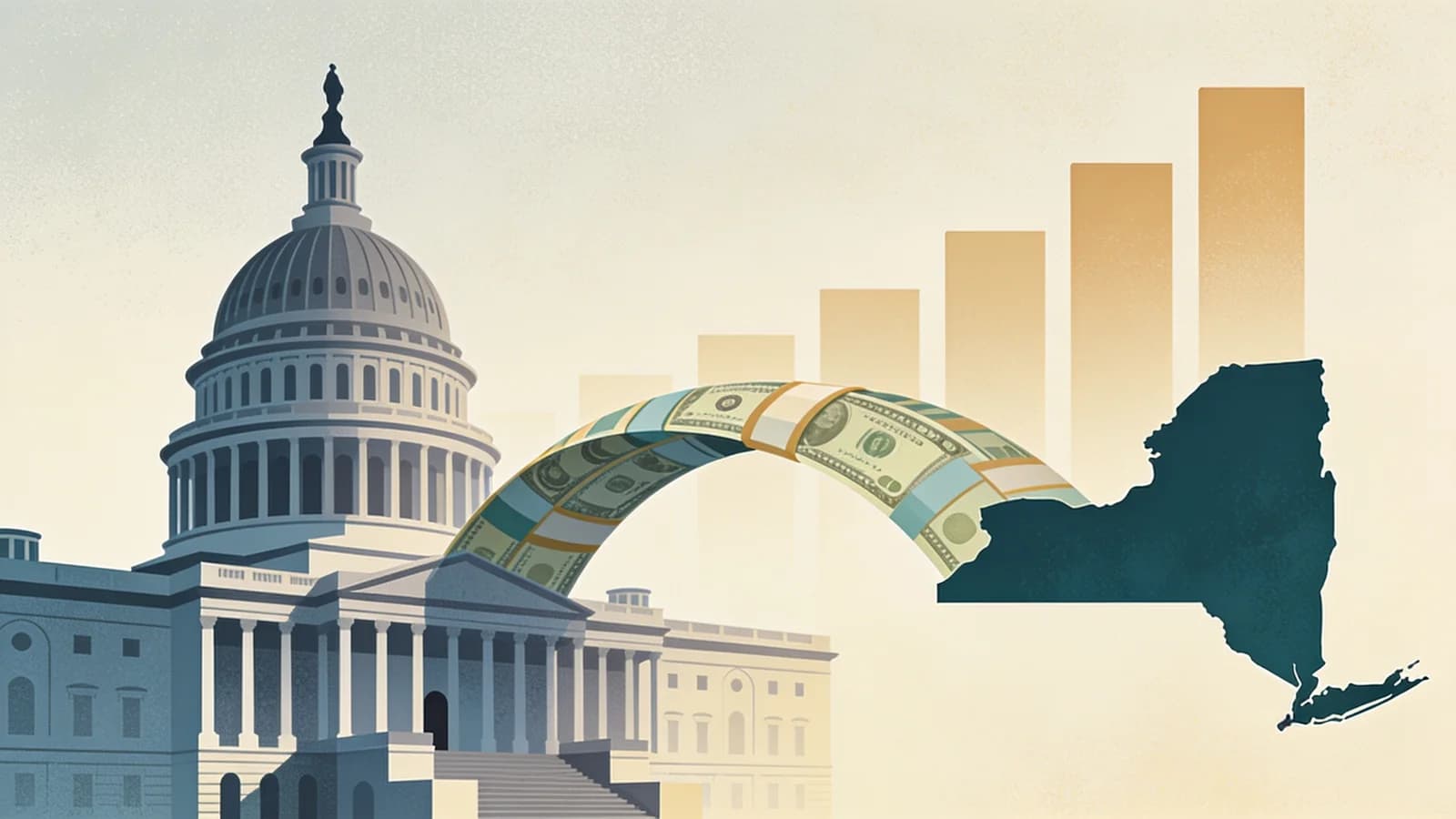
The federal government is redirecting how it approaches homelessness and addiction. Health and Human Services Secretary Robert F. Kennedy Jr. on February 2 announced a $100 million investment in the STREETS Initiative — a new program designed to connect Americans experiencing homelessness and substance use disorder to psychiatric care, medical treatment, and stable housing.
The announcement, made at SAMHSA's Prevention Day conference in Maryland, represents what Kennedy called "a clear departure from Biden-era policies" that focused on harm reduction and housing-first strategies. The new approach emphasizes recovery and self-sufficiency over what the administration described as "enabling future drug use."
STREETS stands for Safety Through Recovery, Engagement, and Evidence-based Treatment and Supports. It's part of President Trump's Great American Recovery initiative, co-chaired by Kennedy and Senior Advisor for Addiction Recovery Kathryn Burgum.
"Addiction begins in isolation and ends in reconnection," Kennedy said. "Thanks to the leadership of President Trump, we are bringing Americans suffering from addiction out of the shadows and back into community."
What the STREETS Initiative Funds
The $100 million will support four core services: targeted outreach to people experiencing homelessness and addiction, psychiatric care for co-occurring mental health conditions, medical stabilization for withdrawal and acute health issues, and crisis intervention when individuals are at immediate risk.
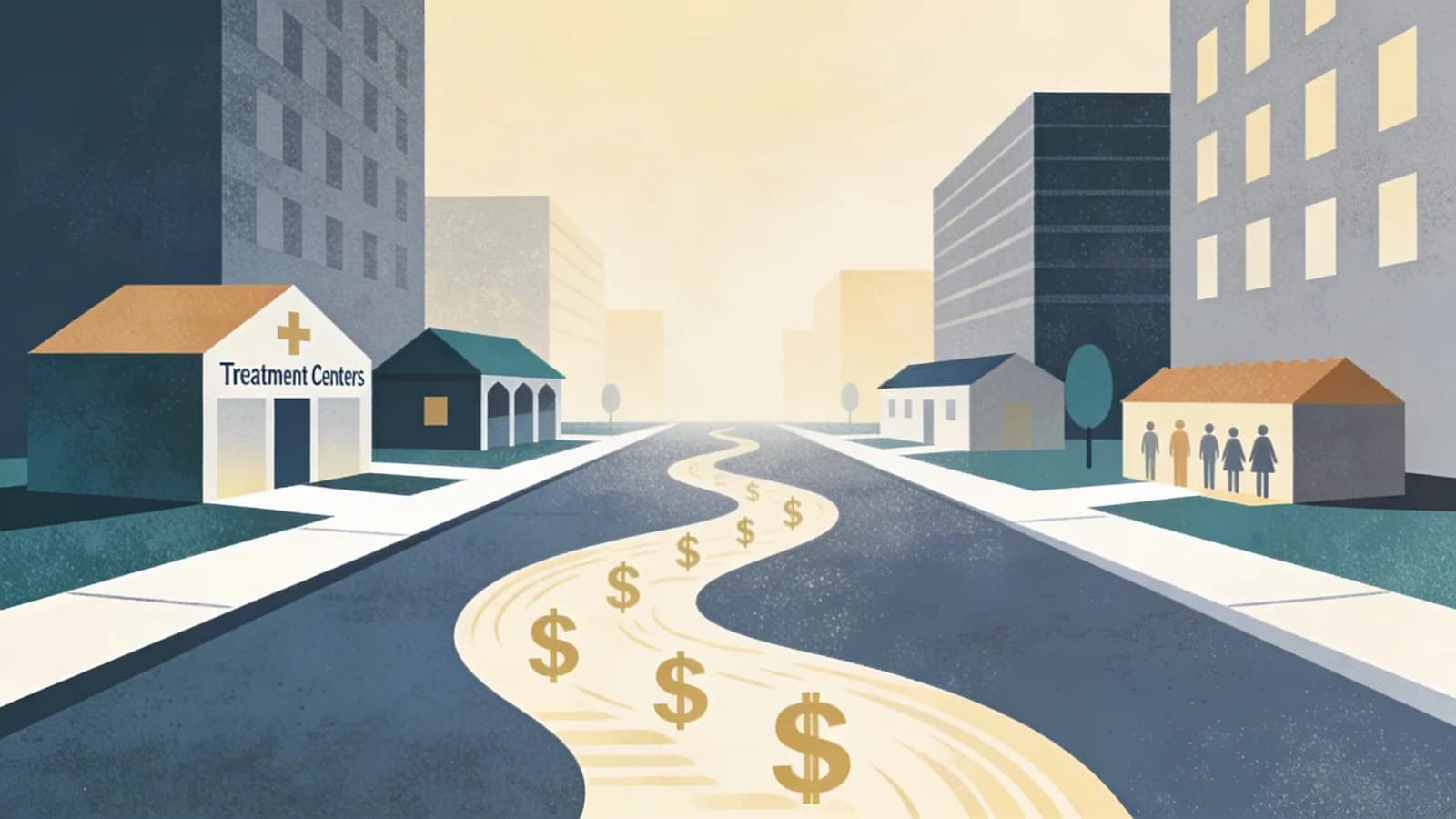
The program's stated goal is to move people off the streets and into stable housing while providing what HHS calls "a clear focus on long-term recovery and independence." Unlike housing-first models that prioritize shelter without treatment requirements, STREETS pairs housing access with recovery-oriented services.
Grant recipients will be expected to coordinate across systems — connecting participants to housing providers, mental health clinics, medication-assisted treatment programs, and job training services. The administration has emphasized that faith-based organizations are encouraged to apply for funding and participate in program delivery.
SAMHSA will administer the grants, though application timelines and eligibility criteria have not yet been published. HHS said details will be released in the coming weeks.
The Policy Shift
Kennedy's announcement explicitly criticized the previous administration's approach to addiction and homelessness. He pointed to harm reduction strategies — such as distributing clean syringes, providing safe consumption sites, and offering housing without treatment mandates — as "misguided" and "failing to stem the tide of death, addiction, homelessness, and crime."
The critique aligns with a broader policy shift under the Trump administration. In July 2025, President Trump signed an executive order titled "Ending Crime and Disorder on America's Streets," which directed SAMHSA to prioritize evidence-based substance use disorder programs and assisted outpatient treatment over harm reduction initiatives.
Harm reduction advocates have argued that their approach saves lives by meeting people where they are, reducing overdose deaths through naloxone distribution, and preventing the spread of infectious diseases. The administration's position is that these strategies, while reducing immediate harms, do not move people toward long-term recovery.
Kennedy's February announcement coincided with SAMHSA's first 2026 block grant allocation — $794 million split between mental health services ($319 million) and substance use prevention and treatment ($475 million). The timing signals that recovery-focused programming will be a priority across federal addiction funding streams.
By the Numbers
SAMHSA survey data released in 2024 shows substance use disorder has more than doubled in five years. Among Americans aged 12 and older, the rate of substance use disorder rose from 7.4% in 2019 to 16.8% in 2024.
That translates to tens of millions of people. And the treatment gap is massive: nearly 8 in 10 people with a substance use disorder in 2024 did not receive treatment, according to SAMHSA's National Survey on Drug Use and Health.
The reasons for this gap are complex — barriers include cost, lack of insurance, shortage of treatment providers, stigma, and geographic access issues. Rural areas and low-income urban neighborhoods are particularly underserved.
The STREETS Initiative targets one specific subset of this population: people experiencing both homelessness and addiction. This group faces compounded barriers — no stable address, limited access to healthcare, and often co-occurring mental health conditions that make it harder to navigate treatment systems.
HHS did not specify how many people the $100 million is expected to reach, or which cities and states will receive funding. For comparison, SAMHSA's State Opioid Response grants totaled $1.86 billion in fiscal year 2025, serving all 50 states and several territories.
Assisted Outpatient Treatment Expansion
Alongside the STREETS Initiative, Kennedy announced a $10 million grant program for Assisted Outpatient Treatment, or AOT. This is a civil court-ordered program for adults with serious mental illness who are unable or unwilling to engage with conventional outpatient care.
AOT programs work through the civil court system, not the criminal justice system. A judge can order someone to participate in community-based mental health treatment as an alternative to involuntary hospitalization or incarceration. The person is not detained, but must comply with the treatment plan or face potential civil commitment.
Supporters argue AOT fills a gap for people who cycle repeatedly through emergency departments, jails, and homeless shelters without ever stabilizing. Critics say it raises ethical concerns about forced treatment and can erode trust between patients and providers.
New York has had an AOT law since 1999, known as Kendra's Law. It allows courts to order outpatient treatment for individuals who meet specific criteria: history of noncompliance with treatment, two hospitalizations or violent behavior in the past 36 months, and likelihood of relapse without supervision.
The federal AOT grants announced in February will support states that want to expand or establish similar programs. SAMHSA said the funding is intended to increase access to AOT services and reduce reliance on more restrictive settings like psychiatric hospitals or jails.
Medication Access for At-Risk Families
A third component of Kennedy's February announcement focuses on families. The Administration for Children and Families, a division of HHS, added three medications for opioid use disorder — buprenorphine, methadone, and naltrexone — to the list of prevention services eligible for federal funding under Title IV-E.
This change allows states and tribes to receive a 50% federal match to provide these medications to parents when children are at imminent risk of entering foster care but can remain safely at home or with relatives if the parent receives treatment.
The goal is to prevent family separation. Substance use is a factor in an estimated 35% to 50% of child welfare cases, according to the National Center on Substance Abuse and Child Welfare. Removing children from their homes is traumatic and expensive; keeping families together while addressing addiction is both better for children and more cost-effective.
All three medications are FDA-approved and have decades of evidence supporting their use. Buprenorphine and methadone are opioid agonists that reduce cravings and withdrawal symptoms. Naltrexone is an opioid antagonist that blocks the euphoric effects of opioids.
New York already has robust MOUD programs through OASAS and Medicaid, but the federal match for child welfare cases could expand access for families who might not otherwise qualify for treatment funding. States will need to amend their Title IV-E plans to take advantage of the new option.
What This Means for New York
New York will receive a portion of the $794 million SAMHSA block grant allocation announced in February, though the exact amount has not been published. The state also has the opportunity to apply for STREETS Initiative grants when applications open.
New York has one of the largest homeless populations in the country — over 103,000 people experienced homelessness in 2024, according to HUD's point-in-time count. Roughly one-third of those individuals have a substance use disorder, and many also have serious mental illness.
The STREETS model could complement existing state and city programs. New York City's SHOW teams (Social Health Outreach Workers) provide street outreach and connection to services. The city's Track to Treatment program connects people arrested for low-level offenses to treatment instead of jail. And OASAS operates mobile medication units that bring buprenorphine and other medications directly to people on the street.
Whether STREETS funding will expand these programs or create new ones depends on how the grants are structured and whether state and local governments apply. SAMHSA has not yet published a notice of funding opportunity.
The AOT grants could support expansion of Kendra's Law services, particularly in counties outside New York City where access to court-ordered outpatient treatment is more limited. And the Title IV-E medication option gives counties a new tool to support families in the child welfare system.
The policy questions — whether recovery-focused mandates are more effective than harm reduction, whether court-ordered treatment is ethical, whether housing should be conditional on sobriety — will continue to be debated. What's clear is that the federal government is directing significant resources toward a model that ties treatment, housing, and recovery together, and states like New York will need to decide how to use them.
Written by
MTNYC Editorial TeamThe MTNYC Editorial Team is a group of healthcare writers, researchers, and addiction specialists dedicated to providing accurate, compassionate, and evidence-based information about addiction treatment and recovery resources in New York State.