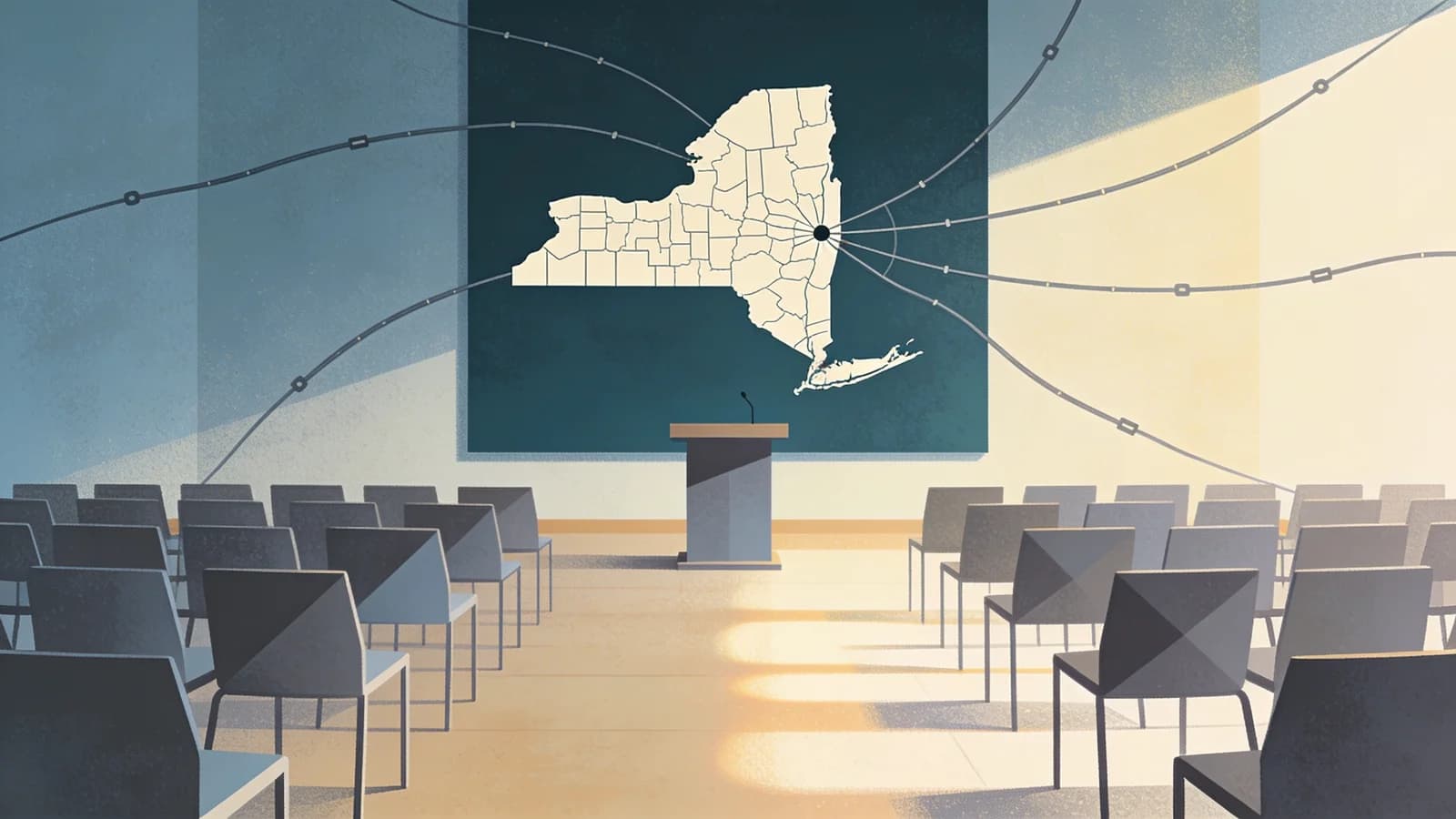
Michigan's Addiction Counselor Shortage Is a Warning for New York
Michigan ranks 38th nationally in addiction treatment staffing. With similar workforce pressures mounting in New York, experts warn the crisis could spread east.

Alyssa Montague finally has a fully staffed team. For the first time since early 2024, the community engagement manager at Ten16 Recovery Network in Midland, Michigan, is not covering multiple positions herself. The therapist who works under her is no longer "slammed." Neither is she.
But this small victory at one treatment center masks a crisis unfolding across Michigan—and one that experts warn could soon hit New York just as hard.
Michigan now ranks 38th nationally in addiction treatment staffing, with just 7.58 counselors per 1,000 people with substance use disorders, according to state health department data. The national median is 8.79. Indiana leads the nation with 16.54 counselors per 1,000 patients. The gap between top-performing states and those struggling to maintain basic workforce levels has never been wider.
"We're all struggling," Montague told Bridge Michigan in a recent interview. Her words echo what addiction treatment providers across the Midwest are saying as they confront a workforce shortage that threatens to undermine decades of progress against the opioid epidemic.
The Scope of the Crisis
The numbers paint a stark picture. An estimated 1.3 million Michiganders with substance use disorders—including alcoholism—did not receive treatment in 2024, according to the National Survey on Drug Use and Health. While the majority of those individuals never seek help, providers say the workforce shortage makes it nearly impossible to meet demand from those who do.
The consequences are measurable. One Michigander dies from an opioid overdose roughly every six hours.
At Sacred Heart Rehabilitation Center, which operates locations across Michigan, annual turnover for therapists and counselors hit 39% in the last fiscal year. The organization's residential treatment program saw 62% turnover—nearly double the already-high rate for outpatient services.
"We're constantly having to retrain people," said Paula Nelson, president and CEO of Sacred Heart. "A couple years ago, I said we can't continue this for any more than five years, and I still believe that."
Why Counselors Are Leaving
Multiple factors are driving addiction counselors out of the field faster than new professionals can replace them.
The work itself takes a heavy toll. Counselors face high rates of burnout and secondary trauma, working daily with people at the lowest points in their lives. "It's not for the faint of heart," said Anthony Dondero, an addiction counselor at Hegira Health in Wayne County. "I had to really wrap my head around and really process the fact that more of my clients are going to pass away from the disease that I'm treating than if I were treating just general mental health."
The pandemic accelerated an existing problem. Post-COVID demand for behavioral health services spiked faster than workforce development could match. Many counselors experienced burnout and left the field; others retired early. Organizations could not attract enough new counselors to fill the gaps.
Educational limitations compound the problem. Michigan has among the fewest behavioral health vocational programs in the nation, substantially weakening the pipeline from student to practitioner. Fewer training programs mean fewer qualified candidates entering the workforce each year.
Perhaps most critically, the pay often does not match the demands of the job. While some private therapy settings pay up to $120,000 annually, addiction treatment nonprofits—funded primarily by Medicaid and private insurance—pay significantly less. The average base salary for licensed addiction counselors is approximately $50,506, according to Payscale data.
Many counselors leave addiction treatment for general mental health positions that offer similar or better compensation with less administrative burden and lower stress levels.
What This Means for New York
New York has not yet reached Michigan's level of workforce crisis, but warning signs are visible.
Governor Kathy Hochul's 2027 executive budget proposal includes new initiatives to support the addiction workforce, including youth-focused prevention campaigns and expanded young adult recovery residences. The proposal acknowledges what providers have been saying: without adequate staffing, treatment infrastructure cannot function effectively.
The state's recent success in reducing overdose deaths—down 44.9% since 2022—depends on maintaining treatment capacity. That capacity requires counselors, therapists, and support staff who can meet patient needs. If workforce shortages worsen, the progress New York has made could quickly reverse.
Michigan's experience offers a preview of what could happen. When facilities cannot hire enough staff, existing workers take on unsustainable caseloads. Quality of care suffers. Patients who need intensive support receive less attention than their conditions require. Some give up on treatment entirely.
"Instead of receiving dedicated attention from their providers, people in addiction treatment often feel they are told to 'go figure it out,'" said Josh Puckett, a peer recovery coach at Recovery Action Network of Michigan.
The National Context
Michigan is not alone. The National Center for Health Workforce Analysis projects that by 2038, the United States will be short more than 77,000 addiction counselors. The shortage affects rural areas particularly severely, but even urban centers with established treatment infrastructure are feeling the strain.
Some states have responded more effectively than others. Massachusetts has provided more than $270 million since 2022 to repay student loans for direct care providers, including addiction treatment professionals. The investment has helped the state rebuild its workforce faster than peers.
Michigan has taken smaller steps. The state has offered $12.3 million through behavioral health student loan repayment programs and $3.7 million specifically for addiction treatment providers. Beginning this summer, the health department will provide internship and scholarship opportunities to incentivize new providers to enter the field.
Federal support has come through the Opioid Workforce Expansion Program, which funds training for students in addiction treatment settings. But providers say federal and state funding has not kept pace with demand, particularly for uninsured residents who remain the most underserved population.
Looking Ahead
Treatment organization leaders in Michigan are increasingly vocal about the need for systemic change. Greg Toutant, CEO of Great Lakes Recovery Centers, argues that providers must unite to push for changes to the reimbursement model that governs how treatment is funded.
"I don't think there's been enough voices to rise up in opposition to say to the state of Michigan, 'Wake up,'" Toutant said. "The workforce problem will not change unless the financing model changes."
The concern extends beyond individual facilities. If provider closures accelerate, communities lose access to essential services. Hospitalizations increase. Overdose deaths rise. Incarceration rates climb as people with untreated addiction encounter the criminal justice system.
For New York, the lesson is clear: workforce investments cannot wait until crisis hits. The state has made significant progress in reducing overdose deaths through expanded access to treatment, harm reduction services, and recovery support. Maintaining that progress will require ensuring that enough qualified professionals are available to provide the services the state has worked to make available.
As Michigan's experience shows, once a workforce crisis takes hold, reversing it becomes increasingly difficult. The time to act is before the shortage becomes severe—not after.
If you or someone you know is struggling with substance use, help is available. Call the New York State HOPEline at 1-877-8-HOPENY (1-877-846-7369) or text HOPENY (467369) for confidential support 24/7.
Written by
MTNYC Editorial TeamThe MTNYC Editorial Team is a group of healthcare writers, researchers, and addiction specialists dedicated to providing accurate, compassionate, and evidence-based information about addiction treatment and recovery resources in New York State.