New York's $1.3 Billion Betting Boom Leaves a $12 Million Safety Net
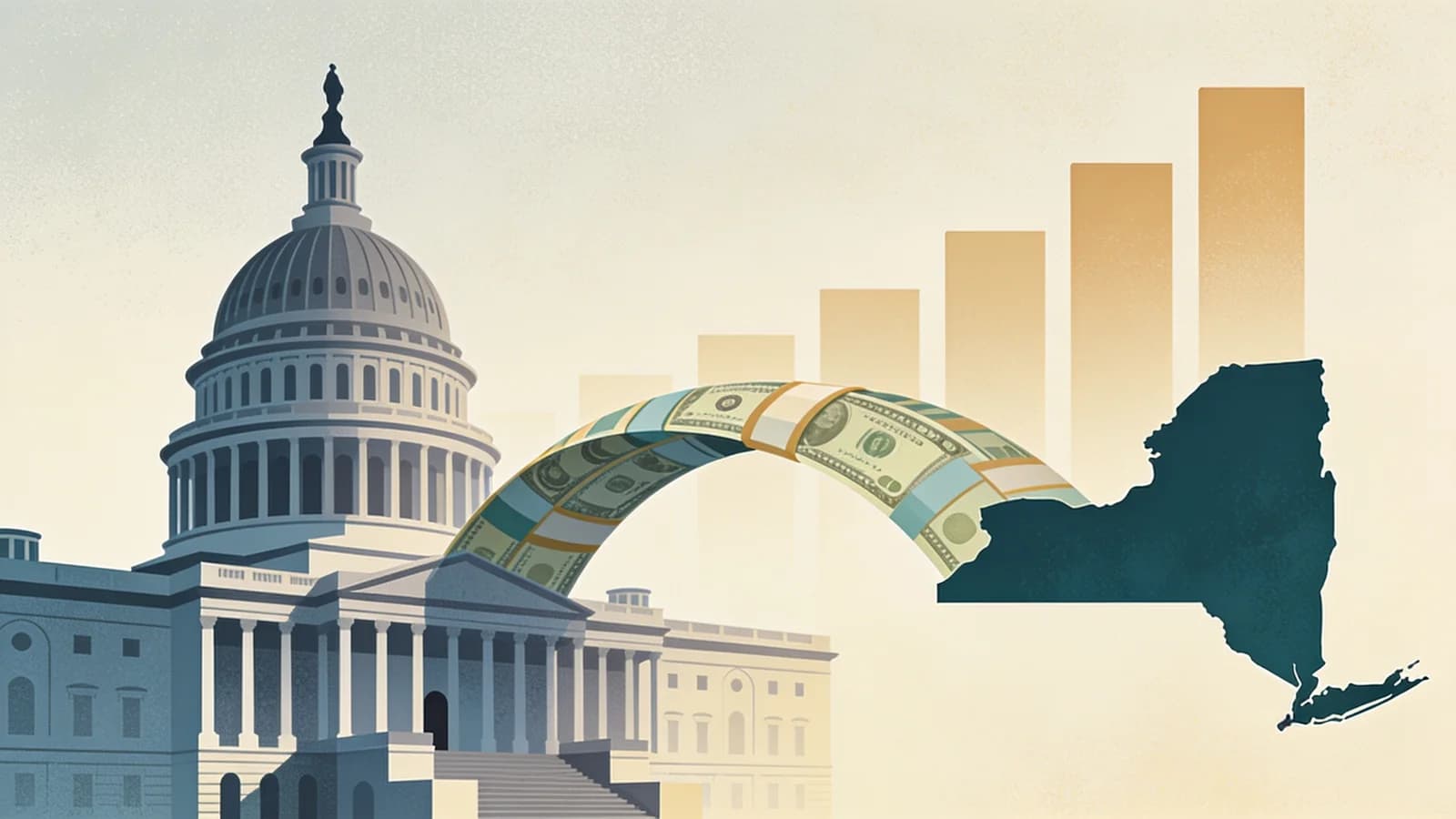
Mobile sports betting generated $1.3 billion for New York in state fiscal 2026. The comptroller's new report pairs that with 2,545 HOPEline calls and a $12 million treatment budget.

New York State collected $1.3 billion from mobile sports betting taxes in the fiscal year that ended in March, a figure that now trails only the lottery among the state's gaming revenue sources. State Comptroller Thomas P. DiNapoli put that number in front of the public on September 16, in a report titled Sports Wagering in New York, and then attached a second set of numbers to it.
Those numbers are smaller. Much smaller. The state's problem gambling HOPEline fielded 2,545 calls in the most recent reporting period, up 8.5 percent from 2020. Funding for problem gambling services has doubled, from $6 million to $12 million — a change DiNapoli described as welcome and, in the same breath, as "a drop in the bucket compared to the billions being wagered."
The report arrives at an awkward moment for addiction services in New York. The state has spent the past four years celebrating a sharp decline in overdose deaths, funneling nearly $500 million in opioid settlement money into treatment and harm reduction. Mobile sports betting sits outside most of that architecture. It raises a different revenue stream, feeds a different set of harms, and — until this year — was funded through a line item small enough to fit in rounding error.
The Second-Biggest Revenue Line in Albany
Mobile sports betting went live in New York in January 2022. Since then, bettors have placed more than $91.2 billion in wagers through licensed platforms, generating $8.3 billion in gross gaming revenue. Tax collections on that revenue climbed 78.4 percent between state fiscal year 2023 and state fiscal year 2026, from $727.4 million to the $1.3 billion reported this month.
Total gaming revenue for the state reached $5.1 billion in the last fiscal year, roughly one-third higher than a decade earlier. Strip out mobile sports wagering and the rest of the picture darkens: every other form of gaming revenue declined by 0.8 percent over the same span. Lottery proceeds, long the state's workhorse, came in nearly 10 percent below their 2023 peak.
Scale shows up in the bettor-level data too.
| Measure | Figure |
|---|---|
| Mobile sports betting tax revenue, SFY 2026 | $1.3 billion |
| Same measure, SFY 2023 | $727.4 million |
| Total wagered, January 2022 through June 2026 | $91.2 billion |
| Unique mobile sports wagering accounts, 2025 | 7.2 million |
| Average wagered per account, 2025 | $3,500 |
| Average size of a single wager | $42 |
| HOPEline problem gambling calls | 2,545, up 8.5% from 2020 |
| State problem gambling services funding | $12 million, doubled from $6 million |
Basketball alone drew more than $9 billion in wagers. Five sports accounted for over 90 percent of all mobile betting activity, which means the state's revenue curve now bends with the sports calendar. During the World Cup, from June 11 to July 19, gamblers placed $2.5 billion in bets, $775.5 million more than during the same stretch a year earlier.
June also produced the clearest illustration of how little control the state has over its own revenue projections. Betting volume jumped by more than $604 million year over year, a 36.6 percent increase, while gross gaming revenue fell nearly $90 million — a 43.5 percent drop. The New York Knicks won the 2026 NBA championship as underdogs. In the first two weeks of June, bettors wagered over $1 billion and the sportsbooks paid out $14.4 million more than they took in.
Where the Betting Tax Actually Goes
New York's gaming revenue is not earmarked for addiction treatment. Most of it flows toward education, and the problem gambling share is carved out of sports wagering tax receipts rather than from general revenue. Until the recent increase, that share was $6 million a year, administered by the Office of Addiction Services and Supports.
That money pays for the New York Council on Problem Gambling's network of Problem Gambling Resource Centers, for provider training on gambling disorder, and for financial counselors who work specifically with people whose betting has wrecked their finances, according to a March 2026 review by the New York City Office of the Advocate. It is a real continuum of care built on a budget that is smaller than the marketing spend of a single sportsbook in a single month.
DiNapoli's framing was blunt about the mismatch: "We need to do much more to identify how mobile sports betting is impacting New Yorkers and ensure consumers are protected."
Part of the problem is measurement. The comptroller's office noted that the state still lacks reliable demographic data on who is developing gambling problems, which makes it hard to target prevention dollars. New Gaming Commission regulations requiring better data collection took effect on February 28, 2026. The first useful read on those numbers is still ahead.
2,545 Calls and an Age Problem the State Hasn't Solved
The HOPEline figure of 2,545 calls is a floor, not a headcount. It counts people who reached a state-funded line in a year when 7.2 million accounts placed bets. OASAS has said the majority of both bettors and people seeking help are between 18 and 35 years old.
A 2025 report prepared for OASAS found that New York has not yet adopted what public health researchers consider best practice: concentrating gambling prevention on young adults who are not in college, a group that sits outside the campus-based programs where much early intervention happens. The city advocate's review repeated that finding in March.
The shift from in-person to online gambling is doing much of the work here. Research cited in that review associates internet-based betting with larger increases in problem gambling than land-based alternatives, which is the same conclusion OASAS reached when it reported a significant rise in problem gambling treatment utilization since at least 2020, with the steepest jump coming after mobile sports betting became legal.
Prediction Markets Broke the Age Limit
The comptroller's report spends several pages on a category of product that did not exist in New York's regulated gambling market when mobile sports betting launched: prediction markets.
Platforms such as Kalshi and Polymarket let users buy and sell event contracts tied to real-world outcomes, including sports results. Global trading volume on the two platforms reached $24 billion and $27.1 billion respectively in 2025, and totaled $208.6 billion through July of this year. Sports-related contracts account for 79.8 percent of Kalshi's volume and 51.2 percent of Polymarket's.
New York treats them as gambling operations. The Gaming Commission sent Kalshi a cease-and-desist letter in October 2025. On July 31, Governor Kathy Hochul and the state Attorney General announced that New York had sued the company for running what they described as an illegal gambling operation and asked a court to force it to forfeit alleged illegal gains. A coalition of 44 state attorneys general, New York among them, sent a letter arguing that the Commodity Futures Trading Commission lacks authority to regulate sports-related event contracts.
The public health argument against them is narrower and more concrete. Mobile sports wagering requires users to be at least 21. Many prediction markets allow participation at 18, and OASAS notes that they operate with fewer safeguards than regulated sportsbooks — including lighter advertising restrictions and no state taxation to support prevention and treatment services. The comptroller's report uses the word "exacerbate."
What Help Looks Like Right Now
Treatment for gambling disorder in New York runs through a patchwork that most people only find after a crisis. OASAS licenses and funds outpatient and residential programs that treat gambling alongside substance use and mental health conditions, and the HOPEline operates around the clock as the entry point.
The First Call Is Usually About Debt
The first call is almost never about gambling. Jim Huh, a senior vice president at the financial counseling service Gamfin, described the pattern in a state podcast episode: "When people call in for help, they're typically calling about financial issues. They're not calling to say I have a gambling problem and I want to see a therapist. They say I'm in credit card debt, I owe money all over the place, I need help with my finances."
That mismatch shapes how the state's funded services are designed, and it also explains why the data problem matters. Screening for gambling harm rarely happens in emergency departments or primary care, so the treatment system learns about cases mostly through self-referral and family pressure.
For anyone in New York who needs it, the state's own channels are:
- NYS HOPEline, 24/7 and confidential: 1-877-846-7369, or text HOPENY to 467369
- Voluntary self-exclusion from all licensed gambling in the state, through the NYS Gaming Commission
- Problem Gambling Resource Centers and local treatment referrals through OASAS
The Next Budget Fight
Two forces are about to push in the same direction. New York is moving toward opening three downstate casino licenses, a development the city advocate's report flagged as a reason to expand prevention messaging rather than wait for demand to appear. And prediction market volume is climbing faster than any regulatory response to it.
Against that, DiNapoli is asking for something unglamorous: better data and timely reporting, so the state can see who is being harmed before it writes the next budget. The National Council on Problem Gambling has pushed a larger structural fix — diverting half of the federal sports betting excise tax into problem gambling treatment — though that would require Congress to act.
For now, the arithmetic is simple. New York collected $1.3 billion last fiscal year from people betting on sports. It spends roughly one percent of that on helping the ones who cannot stop.
Written by
MTNYC Editorial TeamThe MTNYC Editorial Team is a group of healthcare writers, researchers, and addiction specialists dedicated to providing accurate, compassionate, and evidence-based information about addiction treatment and recovery resources in New York State.