NYC Pays 20 Cents a Needle. It Collected 3.5 Million.
New York City made its cash-for-syringes pilot permanent after 3.5 million needles came off streets, parks and sidewalks. Inside the numbers and who they reach.
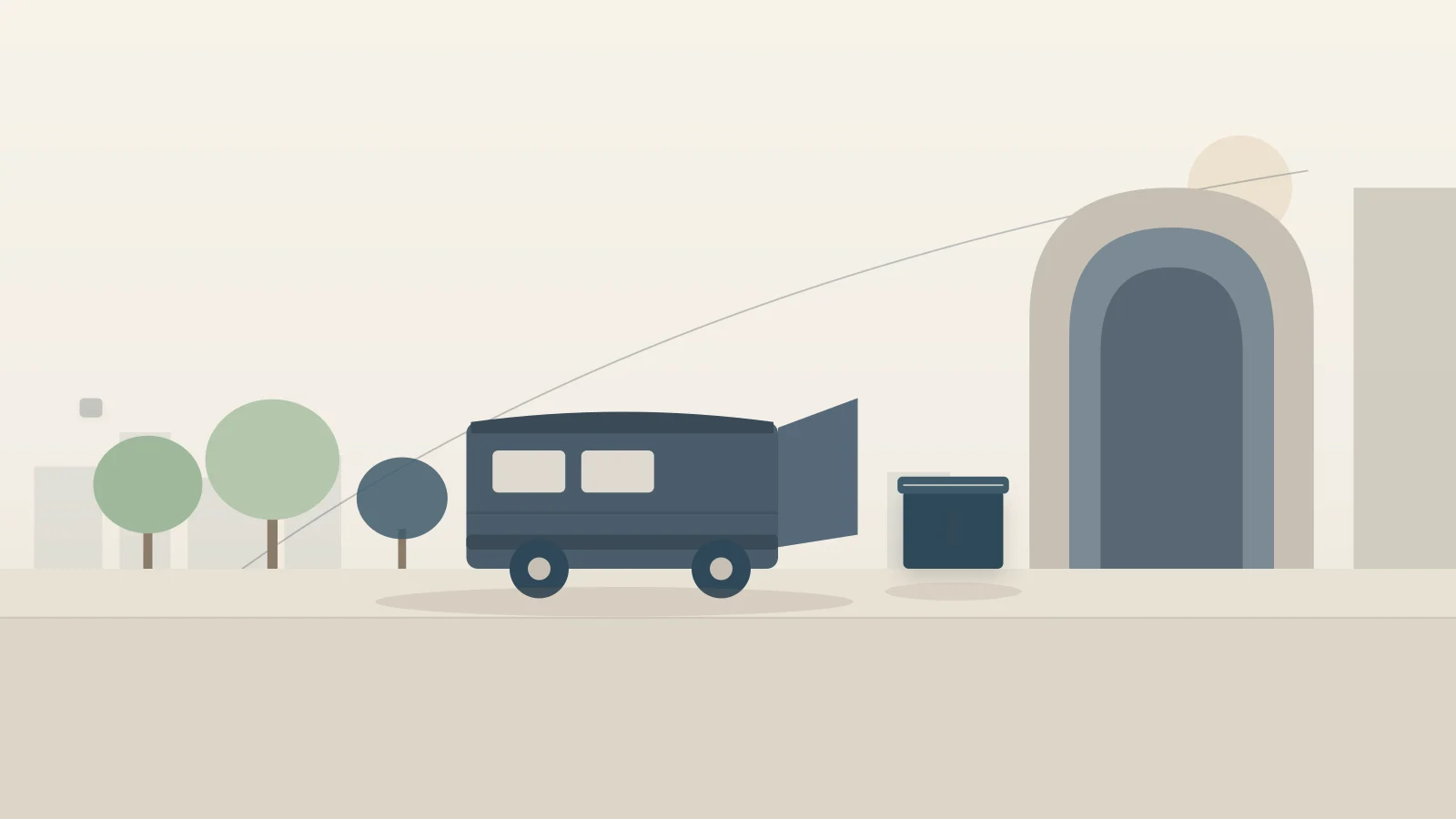
The receipts are small and the arithmetic is blunt. New York City paid out $292,695 in the first year of its syringe redemption program, roughly 20 cents for every used needle a resident carried to a van and dropped into a sharps container. In return the city got 1,465,816 syringes out of parks, underpasses and sidewalk edges.
On October 20 the Health Department announced it is no longer running an experiment. The Community Syringe Redemption Program, launched in March 2025 as a pilot, is now permanent. City figures put the running total at more than 3.5 million syringes collected and more than 2,400 people enrolled through September.
The announcement was written as a success story, and by the numbers it is one. The fuller accounting is more complicated, and more useful: it shows exactly where the city's needle litter is concentrated, how little of it flows into treatment, and why New York is now paying people to do work its own cleanup crews used to handle.
A Pilot That Stopped Being a Pilot
The program runs on the authority of Local Law 124 of 2022, a City Council measure that set up a buyback model for used syringes. The Health Department handed operations to Addiction Response Resources, a harm reduction group that had already built the underlying model. The pilot opened in March 2025 at a handful of sites and never really scaled up in geography. It scaled up in volume instead.
The mechanics are deliberately unglamorous. A participant enrolls at a van, sits through a training session on syringe safety, overdose response and program rules, and signs a liability waiver. After that they can return used syringes once per day at each site, in multiples of five, at 20 cents each, with a cap of $10 per person per site per day written into the law. Vans run Thursday through Monday, on a rotating public schedule chosen to avoid clashing with school hours and storefront business.
The program's design details matter more than they look. Running Thursday to Monday means the vans operate on weekend days when many fixed syringe service programs are closed. The $10 cap limits both the city's liability and any single participant's take. And the enrollment training means every participant has been briefed on naloxone before they ever hand over a needle.
What 20 Cents Buys
The Health Department's first-year report, covering March 2025 through February 2026, is unusually granular for a municipal program. It tracks syringes, enrollments, stipends and naloxone kits month by month and site by site.
| Month | Syringes collected | Naloxone kits | Stipends paid | New enrollments |
|---|---|---|---|---|
| March 2025 | 341 | 29 | $52 | 28 |
| June 2025 | 98,019 | 49 | $19,593 | 177 |
| September 2025 | 162,034 | 18 | $32,495 | 239 |
| December 2025 | 162,666 | 15 | $32,607 | 105 |
| February 2026 | 202,011 | 10 | $40,566 | 105 |
Three things jump out of that table. The program took three months to find its footing, going from 341 syringes in its opening month to nearly 100,000 by June. Collection volume kept climbing even as new enrollments fell by more than half, from 239 in September to 105 in February, which suggests a stable core of heavy users rather than constant churn. And naloxone distribution moved the opposite way, dropping from 29 kits in the first month to 10 in the last, even as syringe volume grew.
Across the full year the program logged 30,706 transactions and averaged 28,189 syringes and 34 new enrollments per week. Those ratios describe a program that is, functionally, a waste-removal service with a public health coating. That is not a criticism of it. It is what the authorizing law asked for.
Six of Eight Sites Are in the Bronx
The report lists eight operating sites. Six are in the Bronx.
| Site | Syringes collected | Stipends paid | Enrollments |
|---|---|---|---|
| Echo Park (Bronx) | 365,658 | $72,789 | 500 |
| St. Mary's Park (Bronx) | 263,567 | $52,804 | 249 |
| Walter Gladwin Park (Bronx) | 250,078 | $50,269 | 174 |
| Highbridge Park (Manhattan) | 226,024 | $44,406 | 378 |
| Kingsbridge Underpass (Bronx) | 191,510 | $38,503 | 219 |
| The Hub (Bronx) | 157,249 | $31,556 | 221 |
| Rufus King Park (Queens) | 7,479 | $1,517 | 27 |
| Borinquen Place (Brooklyn) | 4,251 | $851 | 7 |
The five Bronx sites together accounted for 1,228,062 syringes, about 84 percent of everything collected in the first year. A single site, Echo Park, handled a quarter of the citywide total. The two outer-borough sites outside the Bronx barely register: Queens and Brooklyn together produced less than 12,000 syringes, or 0.8 percent of the year's collections.
Where the Litter Is, Not Where the Politics Is
Site selection is not arbitrary. The Health Department says locations were chosen on syringe litter need, overdose rates, proximity to existing services and input from local elected officials, and the report describes the eight sites as sitting in the highest-need council districts. The Bronx numbers suggest the screening worked, or at least that it found what it was looking for.
What the map also shows is a gap. There is no redemption site in Staten Island, which has no van on the published schedule. The report does not explain the omission, and the Health Department's announcement does not address it. Given that the program's stated purpose is removing ground syringes, the absence of any Staten Island location means the city has not tested the model in a borough where syringe litter is a recurring complaint at community board meetings.
Nine Referrals in Twelve Months
Buried in the report's service data is a number that will get quoted against the program for years. Over twelve months, the Community Syringe Redemption Program produced nine formal referrals to outside services: four to detoxification, four to medication for opioid use disorder, and one to harm reduction services.
Nine, against 1,775 enrolled participants and 30,706 transactions.
The report is upfront about why. Its stated purpose is "to facilitate the removal of ground syringes (not direct service provision)," and it explicitly positions itself as a complement to the city's 14 contracted syringe service programs rather than a substitute for them. Those programs carry the clinical load: HIV and hepatitis C testing, medications for addiction treatment, counseling, referrals.
Why the Small Number Isn't the Whole Story
Judged as a treatment funnel, the program is a rounding error. Judged as engagement, the picture shifts. The report includes twelve structured interviews conducted with participants in June 2025, and all twelve reported a visible decline in discarded syringes in their neighborhoods. Participants described storing syringes in designated containers at home, a habit the report attributes to repeated contact with the program. Several said the cash gave them an alternative to theft, and most said they spent it on food and household supplies.
The design flaw is in the measurement, not necessarily the work. Referrals only get logged when a participant asks and staff complete a formal handoff. Conversations at a van that end with someone taking a naloxone kit or agreeing to a clinic address are not counted as referrals, and the city has no mechanism in the report for tracking whether anyone who took a referral actually arrived.
The Federal Government Went the Other Way
The permanent extension lands in an awkward national moment for the model it represents. In an April 24, 2026 funding guidance letter, SAMHSA told grantees that federal dollars may not be spent on syringes, fentanyl test strips or pipes, reversing years of harm reduction policy. New York City's redemption program does not depend on that money. It is financed out of city funds under a local law, which is precisely why it could be made permanent while federally funded programs elsewhere were cutting supplies.
That fiscal independence is the program's real protection. A city-funded van schedule cannot be terminated by a change in federal grant guidance. It can be terminated by a mayor or a council that decides 20 cents a needle is the wrong use of city money, and permanence in this case means the program now sits inside the base budget rather than renewing annually as a pilot. That shift matters more than the press release language suggests.
The context also cuts the other way. Provisional CDC data show national overdose deaths down roughly 41 percent over the 12 months ending May 2026, one of the steepest declines on record. Falling death counts make harm reduction easier to fund politically and easier to defund quietly, depending on which argument wins: that the decline proves the interventions work, or that the emergency has passed.
What Permanence Changes for New Yorkers
In practical terms, little changes at the van. The schedule, the 20-cent rate, the $10 daily cap and the training requirement all carry over. What is different is that the program no longer needs annual justification to exist, which means site locations can be planned further out and the operator can hire against a stable budget.
For anyone trying to use it or refer someone:
- Enrollment happens on site during operating hours, no appointment or ID required beyond the program's own intake
- Syringes must come in multiples of five, and payment is capped at $10 per person per site per day
- Naloxone kits are free at the vans to participants and non-participants alike during program hours
- Site locations and the rotating weekly schedule are posted on the Health Department's program page
- For treatment or syringe service referrals, the city points to the NYC Health Map and to 988, reachable by call, text or chat at any hour
Why the City Chose Litter
Compare two numbers from the same city in the same period. In 2025, six Health Department-supported outreach and syringe litter teams collected and disposed of more than 129,000 syringes. The redemption program collected 1,465,816 in its first year, more than eleven times as many, and paid roughly 20 cents for each one.
The comparison is not entirely fair to the outreach teams, which do something the redemption vans do not: they go to the needles rather than waiting for someone to bring them in, and they carry clinical services with them. But the cost argument is hard to escape. At 19.97 cents a syringe, the city bought volume at a price that paid cleanup crews could not match, and it did so by transferring the labor to the people closest to the problem, several of whom described the work as giving them structure and a reason to be up in the morning.
That is the honest case for permanence, and it is a public-safety case more than a treatment case. New York did not build a new pathway into care. It built a cheaper way to clean its parks, attached a training session and a naloxone kit to it, and discovered that the people doing the cleaning wanted to be treated like neighbors. The 3.5 million needles are the measurable part. Whether the model ever becomes something more than a litter program depends on numbers the city is not yet collecting.
Written by
MTNYC Editorial TeamThe MTNYC Editorial Team is a group of healthcare writers, researchers, and addiction specialists dedicated to providing accurate, compassionate, and evidence-based information about addiction treatment and recovery resources in New York State.