DEA Put a Taper Drug Beside Heroin in Schedule I
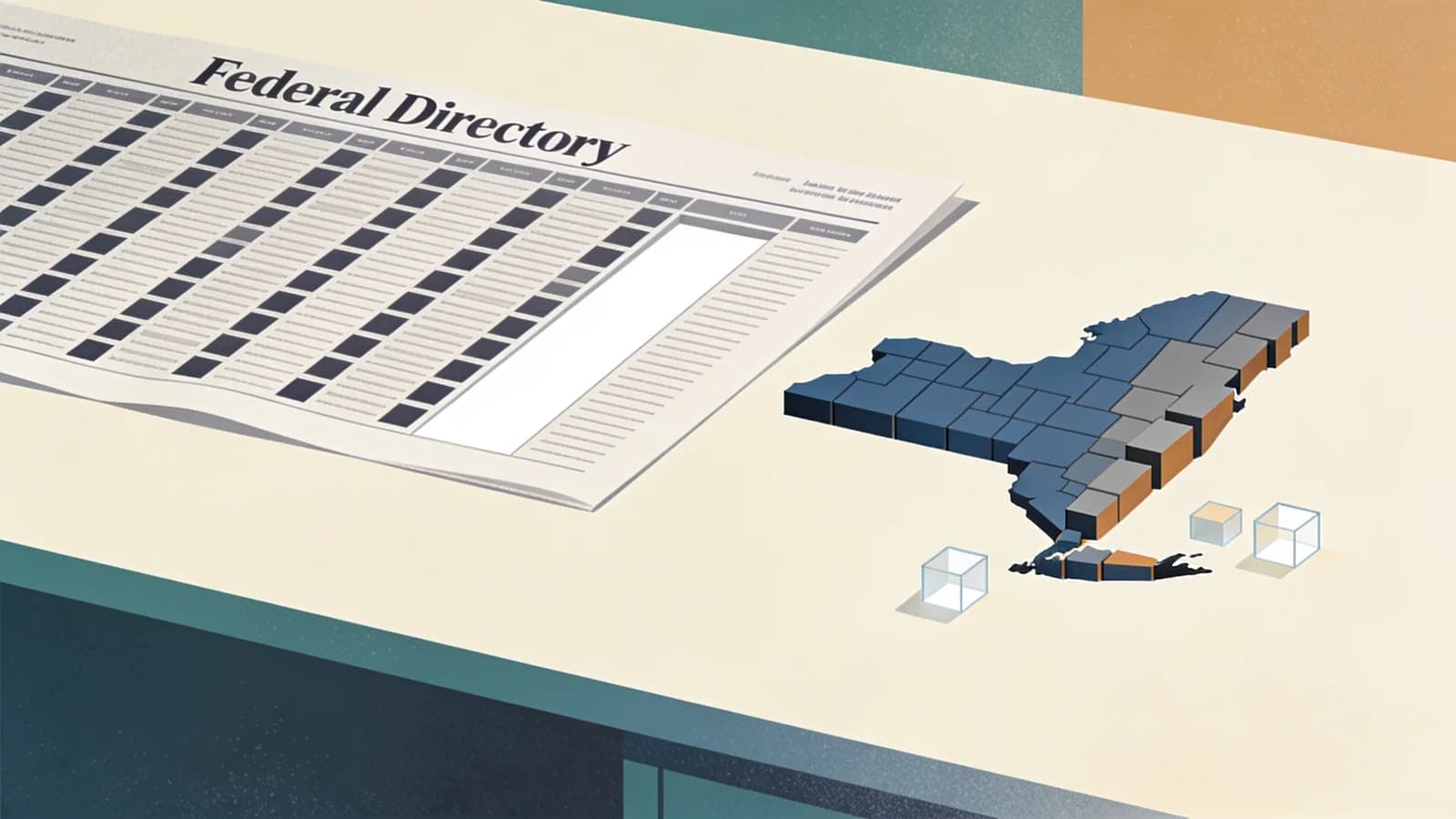
DEA's August order swept SR-17018 into Schedule I alongside three lethal orphines. Researchers lost access, users lost a taper tool, and labs have until Nov. 25.

Two samples. That is the whole of the federal government's forensic record on SR-17018, a compound that chemists designed to blunt opioid withdrawal without suppressing breathing. The Drug Enforcement Administration found those two samples in two states sometime since 2025, according to the notice of intent it published in July, and a West Coast monitoring program turned up a few more.
That was enough. On August 27, the agency placed SR-17018 in Schedule I for two years, in the same order that scheduled cychlorphine, a compound New York's drug supply has already absorbed, along with 5,6-dichloro brorphine and spirochlorphine. Schedule I is where heroin sits: no accepted medical use, high abuse potential, and a registration wall around anyone who wants to handle it.
The order, signed by Administrator Terrance C. Cole on August 23 and docketed as DEA-1665, runs until August 27, 2028, with a possible one-year extension. It took three weeks for the practical consequences to surface in reporting. WIRED published them this week: a University of South Florida pharmacologist who has spent a decade on the molecule can no longer obtain it, and people who used it to step off fentanyl and 7-OH have lost the off-ramp they credit with getting them clean.
The Order That Carried Four Compounds
The four substances in the August order belong to the same chemical family, the benzimidazole opioids known on the street and in toxicology labs as orphines. Three of them have a documented body count. Cychlorphine has appeared in medical examiner cases across the Northeast, brorphine analogues have been tracked in seizure data for years, and spirochlorphine is on the same federal watchlists. The DEA classified them together, in one document, under the emergency authority at 21 U.S.C. 811(h) that lets the attorney general skip the usual eight-factor evaluation when it finds an imminent hazard to public safety.
SR-17018 is the odd one out, and not because of its chemistry. Its chemical name is 5,6-dichloro desmethylchlorphine, which is how it ended up in a batch with compounds it does not resemble in effect. In the laboratory it behaves as a biased partial agonist at the mu-opioid receptor, a molecule that tickles the receptor enough to quiet withdrawal and pain signaling without driving the respiratory depression that kills people. Laura Bohn's team published that finding in Cell in 2017, funded by the National Institute on Drug Abuse, and the university patented it.
That scientific history is why the scheduling decision reads differently to researchers than the cychlorphine cases do. One compound in the order is a poison showing up in baggies. The other is a molecule that never made it past mice and now cannot legally be shipped to a lab in New York, Miami, or anywhere else without a Schedule I registration.
What Users Say It Did
The reporting from WIRED rests on two men who used SR-17018 obtained from the grey market, where it circulated under the shorthand SR-17 until this summer. Jim Bates, a 53-year-old kitchen manager in Duncan, Oklahoma, had cycled through pills, heroin and fentanyl before landing on 7-OH, the concentrated kratom compound the DEA scheduled in October. He tapered off in about three weeks using SR-17018 and describes no physical withdrawal, no euphoria, and no restless legs. Michael, who asked that his last name not be used, says he had failed five times before; this attempt let him keep working.
Both men had used buprenorphine and methadone, the two medications with the strongest evidence base in addiction medicine, and both preferred the unapproved research chemical because it did not require indefinite maintenance.
No Human Has Ever Been Dosed in a Trial
There is no clinical trial data on SR-17018 in people. Not phase one, not a case series, not a single published human pharmacokinetic curve. Everything known about its effects in humans comes from self-reports in Discord servers and Reddit threads, which is the weakest form of evidence in medicine and the easiest to romanticize.
That matters for how the story gets told. A patient reading about a miracle taper is reading about a compound with a plausible mechanism, an animal model, and an unmeasured risk profile. The grey-market product people were buying had no purity guarantee, no dose standardization, and no oversight. Some of what circulated as SR-17 may not have been SR-17.
Bohn's own position, as quoted, is not that the drug is proven. It is that the research needed to find out has been stopped before it started.
The Evidence DEA Relied On
The notice of intent leans on surveillance rather than harm. It cites the National Forensic Laboratory Information System, which logged the two samples, and Rapid Drug Analysis and Research, which detected the compound on the West Coast. It also points to the National Drug Early Warning System, whose weekly briefing featured SR-17018 in November 2025 after monitors saw it discussed in drug forums.
The agency's substantive safety argument is that a drug which resets opioid tolerance can leave a person more vulnerable to overdose the next time they use, since their usual dose no longer matches their tolerance. That is a real pharmacological concern. It is also true of abstinence, of a completed detox, and of any taper without follow-up care, which is why addiction physicians treat post-detox tolerance loss as a reason to keep naloxone nearby rather than a reason to ban tapering.
Robert Rush, a Denver attorney and executive director of the Rights and Reason Project, filed a request asking the DEA to exclude SR-17018 from the order. He told WIRED the agency never answered. His argument is narrow: SR-17018 has not been implicated in an emergency department visit or an overdose death, unlike the other three compounds in the same document. Emergency scheduling under 811(h) is designed for substances already killing people, and it comes with no opportunity for a judge to review the agency's finding.
A Deadline for Labs on November 25
The order does contain a research carve-out, and it expires on a specific date. A researcher who was already registered to handle another Schedule I substance on August 27 may keep working with SR-17018 if the person files an application to register or modify registration within 90 calendar days. Counting from the effective date, that window closes on November 25, 2026.
For a lab that was not already registered for Schedule I work before the order, the carve-out does nothing. For a lab that was, the application buys continued access only until the agency withdraws it or serves an order to show cause. New York's academic medical centers run some of the largest addiction research programs in the country, and any of them now pursuing this molecule is doing it inside a two-year window that can close early.
There is a permanent path. The DEA can move a substance from temporary to permanent control during the emergency period, a process that requires public notice and scientific input. Rush's complaint is that during the emergency period there is no judicial check at all, which is how a compound with no overdose deaths attached to it ends up regulated like one that has them.
What a New Yorker Can Actually Get
The practical question for anyone reading this in Brooklyn, Buffalo or Binghamton is not whether SR-17018 works. It is what the state's licensed system offers this week, and how the evidence compares.
| Medication | Federal schedule | Human evidence | Access in New York |
|---|---|---|---|
| Methadone | II | Decades of trials; reduces overdose death | OASAS-certified opioid treatment programs only |
| Buprenorphine | III | Strong trial base; reduces craving and overdose risk | Any DEA-registered prescriber, no federal waiver since 2023 |
| Naltrexone | Not scheduled | Effective for some patients; adherence is the weak point | Any prescriber; oral or long-acting injectable |
| SR-17018 | I since Aug. 27, 2026 | None in humans | Not legally obtainable; research requires DEA registration |
The gap that pushed people toward a grey-market chemical is real, and it is not a gap in the medication list. Methadone and buprenorphine both work, and both require a commitment that some patients find harder than the withdrawal they are trying to escape: daily clinic attendance in methadone's case, or an indefinite prescription in buprenorphine's. A three-week taper with no maintenance holds obvious appeal. It is also, so far, an anecdote.
New York's system is reachable through the state's 24/7 HOPEline at 1-877-8-HOPENY, or by texting HOPENY (467369). Naloxone is available at pharmacies without a prescription under the state's standing order, and anyone leaving detox or a taper should have it.
Why the Precedent Travels
The order matters beyond one molecule because of what it establishes about timing. The DEA placed 7-OH and MGM-15 in Schedule I over the summer, moved SR-17018 in August, and issued a temporary order on 7-hydroxymitragynine thresholds in October. Each action rested on emergency authority, and each narrowed the space between what people can buy and what regulators have tested.
Rush's warning, as he put it to WIRED, is that banning the gas-station opioids while removing a compound that researchers hoped could become a next-generation treatment sets up the conditions for the next overdose wave. The counterargument is simpler: the compound was never tested in humans, was sold without dose control, and sat in a chemical family that has killed a lot of New Yorkers. Both things can be true.
What is not in dispute is the calendar. A molecule with a patent, a mechanism, an animal model and no human trial now sits in the same schedule as heroin, and the last door open to the researchers who wanted to run that trial closes November 25.
Written by
MTNYC Editorial TeamThe MTNYC Editorial Team is a group of healthcare writers, researchers, and addiction specialists dedicated to providing accurate, compassionate, and evidence-based information about addiction treatment and recovery resources in New York State.