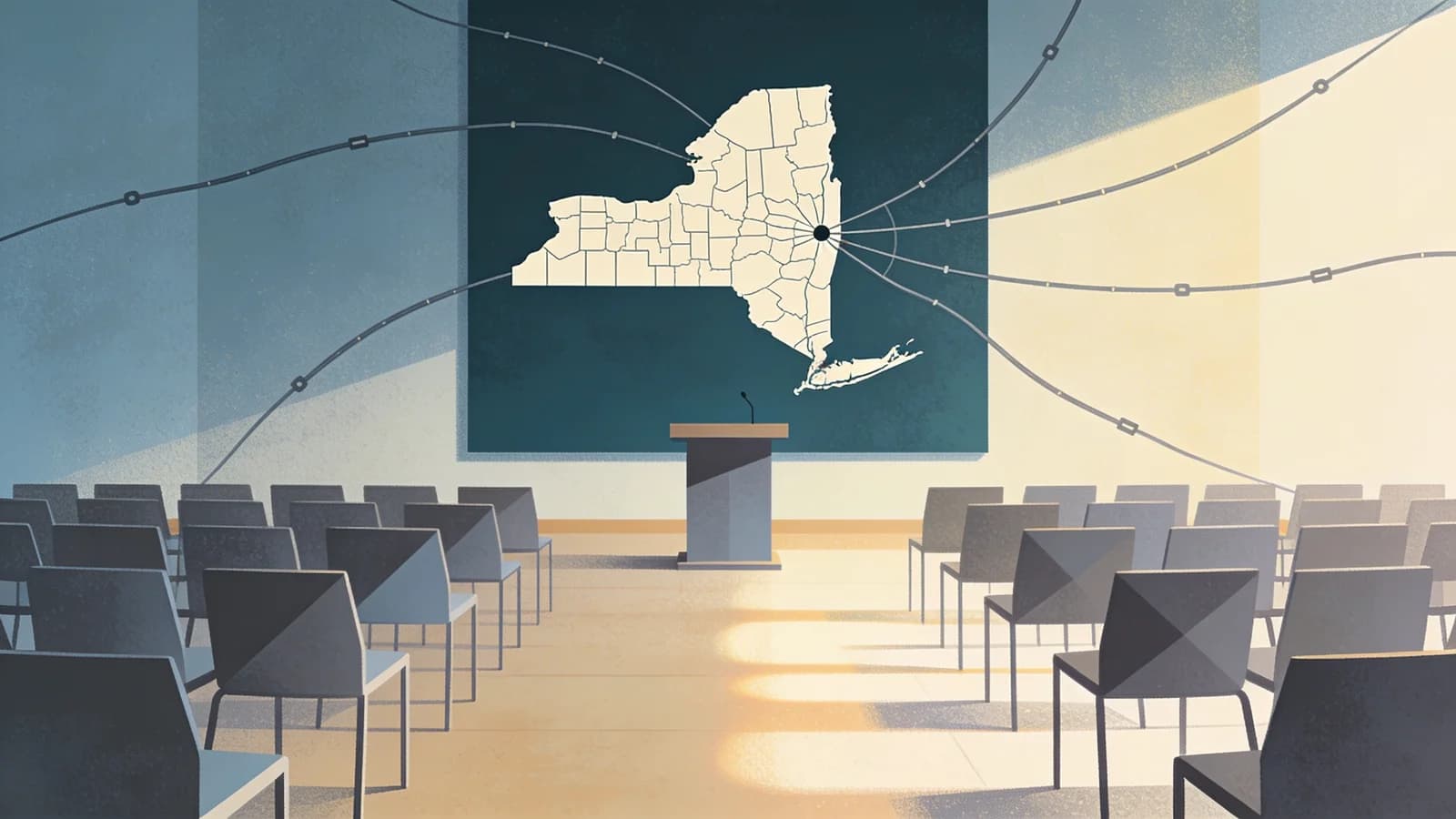
New York Workplaces Will Be Required to Stock Overdose Medication by Next Year
A new state law mandates that New York employers with first aid kits must include naloxone or other opioid overdose reversal drugs by December 2026.
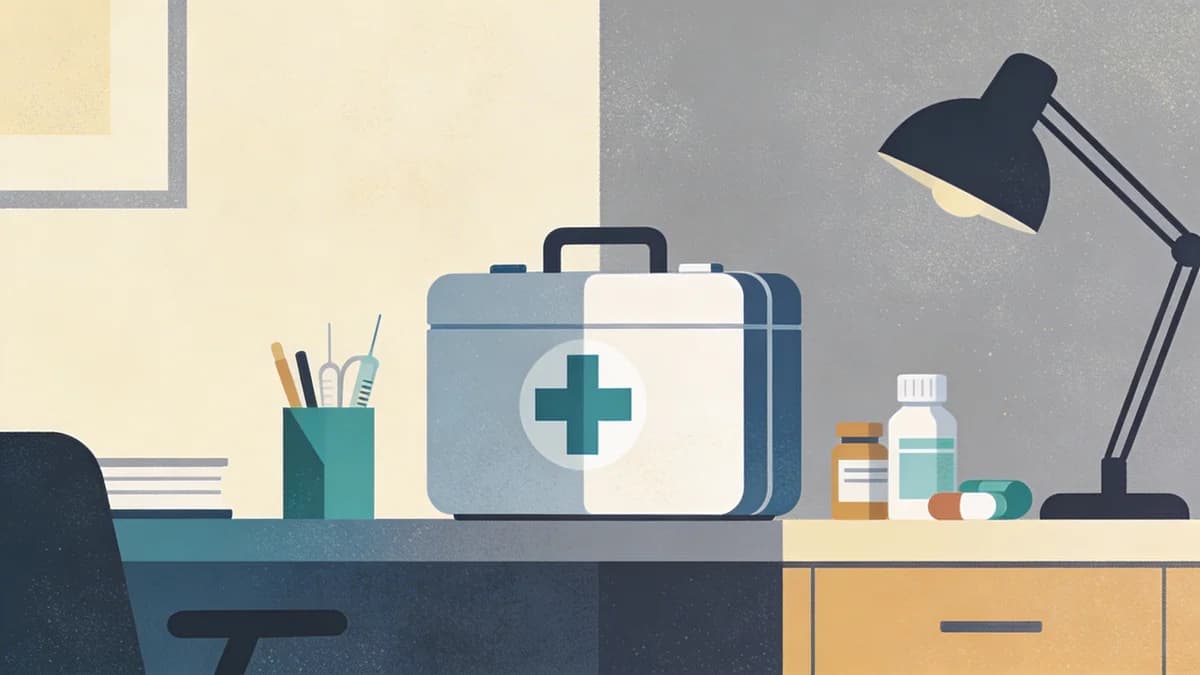
Governor Kathy Hochul signed amendments to New York's Labor Law on February 13, making the state one of the first to require naloxone—the opioid overdose reversal medication—in workplace first aid kits. The requirement takes effect December 13, 2026, giving employers nearly a year to comply.
Starting next winter, any New York business federally mandated to maintain first aid supplies must include an opioid antagonist among those supplies. The most common option is naloxone, sold as Narcan, which reverses overdoses by restoring breathing within minutes.
The law emerged from growing awareness that overdoses don't stop at the workplace door. While New York saw overdose deaths drop 32 percent in 2024—to an estimated 4,567 fatalities from 6,688 the prior year—the crisis still claims more than a dozen lives daily statewide. Roughly 77 percent of those deaths involve opioids like fentanyl or heroin.
"Opioid overdoses stop breathing, but drugs like Narcan are quick and easy to administer and can restore breathing within minutes," said Assemblywoman Amy Paulin, a bill sponsor. "The key is that it's nearby and accessible."
What Employers Need to Know
The law applies to private employers required by federal OSHA standards to maintain first aid supplies. That typically includes workplaces where employees are exposed to potential injuries—construction sites, factories, warehouses, and some retail operations. State agencies and local government employers are excluded.
The statute, designated Labor Law § 27-f, was first enacted in December 2025 but was quickly revised in February after legal experts flagged ambiguities around who qualified as an "employer" and what counted as an "opioid antagonist." The February amendments clarified both definitions and delayed enforcement to December 2026.
The state Department of Labor, working with the Department of Health, is drafting regulations that will spell out how many doses workplaces should stock based on employee count, training requirements, and usage guidelines. Those rules are expected before the December deadline.
Which Industries Are Most Affected
Construction and manufacturing will see the biggest impact. OSHA's first aid requirements kick in when employees work in areas without "infirmary, clinic, or hospital" access within reasonable proximity — defined as 3 to 4 minutes travel time. That covers most job sites, factories, and warehouses statewide.
Healthcare facilities already stock naloxone for clinical use, but the new law extends the mandate to administrative and support staff areas where OSHA first aid rules apply. Retail operations with on-site injury risk — big-box stores, distribution centers, auto repair shops — will also need to comply.
Office environments are a gray area. White-collar workplaces without physical hazards aren't typically subject to OSHA first aid mandates, which means the naloxone requirement won't apply unless the employer voluntarily maintains first aid supplies. But any workplace operating forklifts, power tools, or heavy machinery likely qualifies.
The law doesn't cap how many employees trigger the requirement — a 10-person fabrication shop and a 5,000-worker factory both fall under the same rule if OSHA says they need first aid kits. Forthcoming Department of Labor regulations may specify minimum dose quantities based on headcount, similar to how ANSI first aid standards scale supplies to workforce size.
Practical Steps for Compliance
Where to Get Naloxone
Naloxone is available over the counter at pharmacies across New York under a statewide standing order. Employers can purchase Narcan (nasal spray, 4mg) or generic naloxone without a prescription. Most commercial first aid suppliers — Grainger, Cintas, Henry Schein — now stock naloxone kits designed for workplace use, typically priced between $40 and $150 for a two-dose pack.
Many insurance plans cover naloxone at no cost. Self-insured employers can often negotiate bulk pricing through their carrier or pharmacy benefit manager. New York's Medicaid program covers naloxone for enrolled members, and uninsured individuals can access free doses through local health departments and community-based organizations.
Training Requirements
The current law doesn't mandate employee training, though the Department of Labor's forthcoming regulations may add that requirement. Even without a legal obligation, training is a practical necessity — naloxone only works if someone knows how to use it.
Narcan nasal spray requires minimal instruction: remove from package, insert in nostril, press plunger. Most training programs take 15 to 30 minutes and cover recognizing overdose signs (unconsciousness, slow or no breathing, blue lips), calling 911, administering the dose, and performing rescue breathing if the person doesn't respond within two to three minutes.
The New York State Department of Health offers free online naloxone training through its Opioid Overdose Prevention Program. Local OASAS-certified providers also conduct in-person sessions. Some employers may choose to designate "naloxone responders" — staff trained to grab the kit and act quickly — similar to how workplaces assign CPR-certified employees.
Liability Protection
New York's Good Samaritan Law (Public Health Law §3309) already protects people who administer naloxone in good faith from civil or criminal liability, as long as they aren't grossly negligent or acting with willful misconduct. That applies to trained staff and bystanders alike.
Workplace-specific liability protections may surface in the Department of Labor's regulations, but existing Good Samaritan coverage is broad. An employee who administers naloxone to a coworker during an overdose is shielded from lawsuits under current law. Employers should document training, keep naloxone accessible, and ensure staff know their legal protections.
Storage and Expiration
Naloxone has a shelf life of 18 to 24 months depending on the formulation. Employers will need to track expiration dates and replace doses as they age — a compliance detail that first aid kit audits should now include. Naloxone should be stored at room temperature, away from direct sunlight, in clearly labeled containers alongside other emergency supplies.
Broader Harm Reduction Context
New York has been aggressive in expanding naloxone access. Since 2020, overdose deaths spiked 44 percent, and more than 20,000 New Yorkers died over the following years. In response, the state launched mobile medication units, peer-led overdose prevention programs, and standing orders allowing pharmacies to dispense naloxone without a prescription.
Earlier in February, New York City's health department added a peer-led overdose prevention program at a Brooklyn hospital, the 16th such site in the city. The workplace naloxone law fits into this strategy—treating overdose reversal as a standard safety measure, like a fire extinguisher or defibrillator.
The law stops short of mandating employee training or imposing liability protections for staff who administer naloxone. Those details may surface in forthcoming regulations or future amendments. For now, the state is focused on availability: making sure the medication is present when seconds matter.
Employers who haven't updated their first aid protocols should begin planning now. Naloxone kits are available over the counter at pharmacies statewide, and many insurers cover them at no cost. Businesses subject to the law will need to review inventory, update safety manuals, and train at least some staff on proper storage and use.
As New York continues to see progress against overdose deaths, the workplace naloxone requirement signals a shift in how the state thinks about prevention—not as a clinical intervention reserved for treatment centers, but as a public health tool that belongs wherever people work.
Written by
MTNYC Editorial TeamThe MTNYC Editorial Team is a group of healthcare writers, researchers, and addiction specialists dedicated to providing accurate, compassionate, and evidence-based information about addiction treatment and recovery resources in New York State.