Federal Lab Develops New Drug That Could Cut Fentanyl Overdose Recovery Time in Half
Researchers at Lawrence Livermore National Laboratory discovered subetadex, a compound that reverses opioid overdoses faster than Narcan and stays active for hours instead of minutes.
When someone overdoses on fentanyl, every second counts. The heart slows, breathing becomes shallow, and first responders have a narrow window to reverse the effects before it's too late.
For years, naloxone — better known by its brand name Narcan — has been the frontline defense. It works, but it has a problem: it doesn't last long. Paramedics often have to administer multiple doses as the drug wears off and the overdose comes back. In New York, where fentanyl-related deaths remain a persistent crisis despite recent progress, that limitation costs lives.
Now, a team at Lawrence Livermore National Laboratory has developed something different. Published in the journal ACS Central Science last fall, their discovery could change how emergency responders treat overdoses — not by blocking opioid receptors like Narcan does, but by grabbing the drug itself and neutralizing it before it ever reaches the brain.
How Subetadex Works (and Why It's Different)
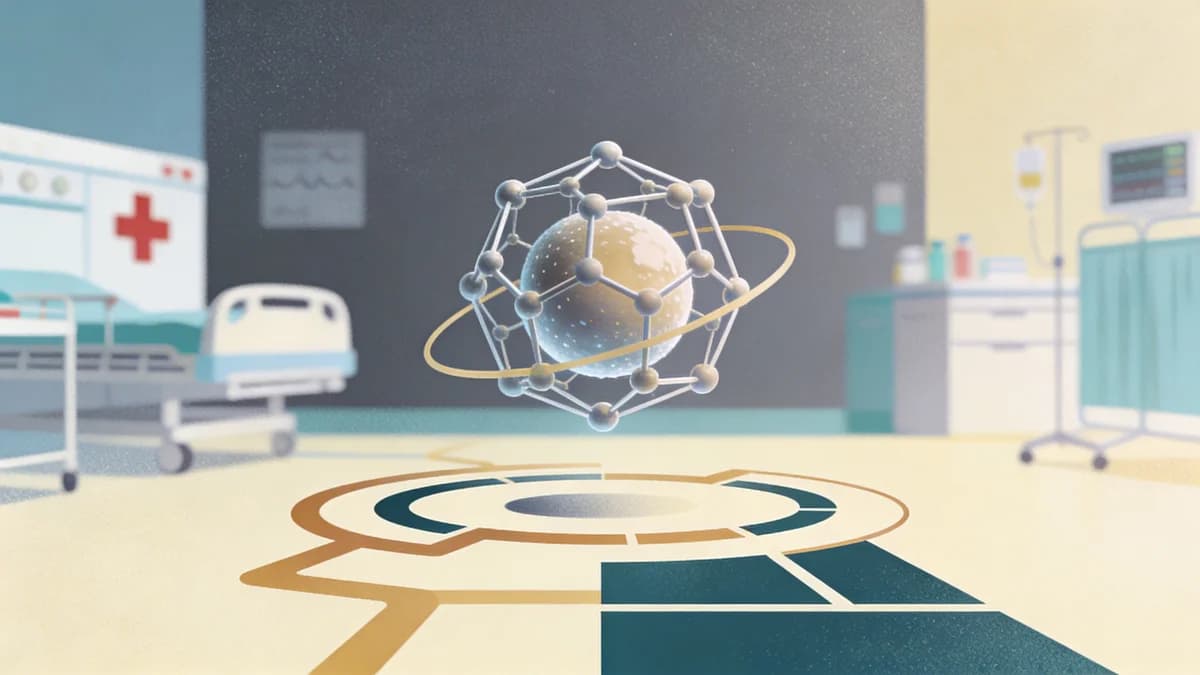
The compound is called subetadex. Unlike naloxone, which competes with opioids for space on brain receptors, subetadex works like a molecular cage. It wraps around the fentanyl molecule, traps it, and prevents it from binding to anything in the body.
"After other cyclodextrins were tested, we were excited to discover subetadex was able to bind fentanyl extremely well, thus preventing it from reaching its biological target," said Carlos Valdez, the chemist who led the project at LLNL's Forensic Science Center.
The team tested more than 50 compounds before landing on subetadex, a cyclodextrin — a sugar molecule shaped into a ring — that was first developed in 2002 but had never been tested against fentanyl. When they analyzed it using nuclear magnetic resonance, they found the compound latched onto fentanyl and didn't let go.
In animal studies, the results were striking. Recovery times dropped from 35 minutes to 17 minutes for fentanyl overdoses. For carfentanil, a drug so potent it's used to sedate elephants, recovery time fell from nearly three hours to just under an hour. And unlike Narcan, subetadex stayed active in the body for about 7.5 hours — long enough to prevent a second overdose wave without requiring another dose.
The Problem with Naloxone
Naloxone saves lives. There's no question about that. Since New York expanded access to the drug, overdose deaths have declined significantly — the state recorded its lowest toll since 2020 earlier this year.
But naloxone has a short half-life: between 30 and 80 minutes. That means it clears the body quickly, and if someone took a large dose of fentanyl or a long-acting opioid, the overdose can come roaring back after the Narcan wears off.
Dr. Edward Bernstein, a professor at Boston University who works with addiction patients in emergency departments, has seen the pattern play out repeatedly. About 30 percent of patients treated for overdoses return to the ER with drug-related issues, and roughly 10 percent come back three or more times.
"Repeatedly administering Narcan to the same individual can leave health care providers feeling discouraged," Bernstein told researchers. It's not just frustrating — it signals that reversing an overdose is only the first step. Without longer-lasting protection and a bridge to treatment, people fall back into the same cycle.
Longer Protection, Fewer Repeat Doses
Subetadex addresses that gap. With a half-life of 7.5 hours, it gives first responders and patients a longer window of stability. That's critical in the field, where paramedics may be dealing with limited supplies, multiple overdose calls in a single shift, or patients who refuse transport to the hospital.
The drug's mechanism — encapsulating the opioid rather than blocking receptors — also means it could work on a broader range of synthetic opioids, including fentanyl analogs that don't respond well to standard naloxone doses.
Biologist Mike Malfatti, a co-author of the study, emphasized the drug's safety profile. In toxicity tests, subetadex showed no adverse effects a day after treatment. It cleared rapidly from major organs like the heart, liver, brain, and kidneys, and its toxicity profile was comparable to sugammadex, an FDA-approved drug used in hospitals.
What This Means for New York
New York has made significant strides in reducing overdose deaths. In early 2025, the state reported 441 overdose deaths in the first quarter — the lowest early-year total since 2020. Mobile medication units, expanded naloxone distribution, and harm reduction programs have all played a role.
But the state still loses hundreds of people each year to fentanyl, and first responders often find themselves administering multiple doses of naloxone to the same individuals. A longer-acting alternative like subetadex could ease that burden, giving paramedics and hospital staff more time to stabilize patients and connect them to addiction treatment.
The research team at LLNL, funded by the Defense Threat Reduction Agency, is already thinking ahead. They want to extend subetadex's half-life even further so it could be used prophylactically — as a preventative measure for first responders or military personnel at risk of exposure to fentanyl. They're also working to expand its range so it can treat a broader spectrum of opioids.
From Lab to Field
Subetadex isn't available yet. The research is still in the experimental phase, and the drug would need to go through clinical trials and FDA approval before it could be used by paramedics in New York or anywhere else.
But the discovery represents a shift in how researchers are approaching the overdose crisis. Instead of simply competing with opioids at the receptor level, they're finding ways to neutralize the drug itself — stopping it before it can cause harm.
For the more than 210,000 Americans who have died from fentanyl overdoses in the past three years, that shift comes too late. But for the next person who collapses on a sidewalk in the Bronx or overdoses alone in a Staten Island apartment, it could be the difference between a second chance and a statistic.
As Audrey Williams, director of LLNL's Forensic Science Center, put it: "The development of a medical countermeasure candidate for the treatment of exposure to a variety of opioids is a really exciting advancement in the fight to counter the opioid epidemic."
Key Comparisons: Subetadex vs. Naloxone
| Feature | Naloxone (Narcan) | Subetadex |
|---|---|---|
| Mechanism | Blocks opioid receptors | Binds directly to opioid molecule |
| Half-life | 30-80 minutes | ~7.5 hours |
| Recovery time (fentanyl) | ~35 minutes | ~17 minutes |
| Repeat doses needed | Often | Unlikely |
| FDA approved | Yes | No (experimental) |
| Availability | Widely available in NY | Research phase |
The full study, led by Carlos Valdez and Mike Malfatti, is available in ACS Central Science. The research was funded by the Defense Threat Reduction Agency and supported by Lawrence Livermore National Laboratory's Laboratory Directed Research and Development program.
Written by
MTNYC Editorial TeamThe MTNYC Editorial Team is a group of healthcare writers, researchers, and addiction specialists dedicated to providing accurate, compassionate, and evidence-based information about addiction treatment and recovery resources in New York State.