State Pulls $5 Million in Funding From Lockport Recovery Group After 15-Year Run
Save the Michaels lost state contracts and closed its Lockport office after audits uncovered unauthorized raises, loans, and fiscal violations by its founder.
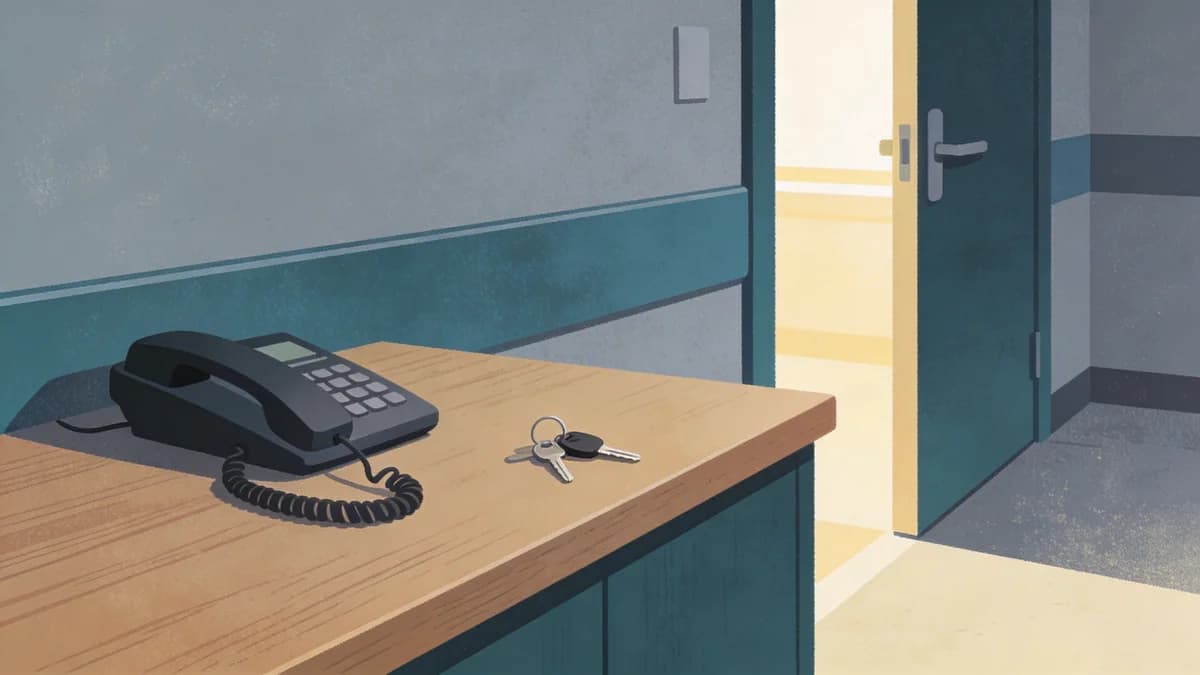
A sign taped to the door of 144 Main Street in Lockport read "Save the Michaels apologizes for any incovenience but is temporarily closed." The misspelling was minor. The impact was not.
For 15 years, Save the Michaels had been one of Western New York's most visible grassroots addiction services providers — answering roughly 55,000 calls a year, driving people to treatment, running peer support groups, and operating drop-in centers in Lockport and Buffalo. Last week, the New York State Office of Addiction Services and Supports (OASAS) terminated its contracts with the nonprofit. Erie County did the same. The Lockport office closed on March 3.
The decision followed a state audit that found years of fiscal mismanagement, unapproved spending, and governance violations by founder Avi Israel. Since stepping down as CEO on January 1, Israel has denied wrongdoing. The organization's new leadership says the state didn't give them a chance to fix the problems. OASAS says it tried — and was denied access to financial records during a follow-up site visit.
What's left is a hole in Western New York's recovery infrastructure, a dispute over who failed whom, and questions about what happens to the people who relied on services that no longer exist.
What the Audit Found
The state's August 2024 audit identified multiple violations of nonprofit governance and fiscal policy. According to the OASAS report, Israel:
- Gave himself a $25,000 raise without board approval
- Took a $39,522 loan from the organization's accounts without authorization
- Charged the nonprofit for out-of-state travel that wasn't pre-approved
- Served on the board of directors alongside his wife Julie, despite both being paid employees — a violation of state policy designed to prevent conflicts of interest
The audit also flagged poor financial controls. "Segregation of duties was absent, or inadequate, over significant accounts and processes," auditors wrote — a red flag in nonprofit accounting because it raises the risk of fraud. Israel's timesheets, for example, were checked by an outside consultant rather than a supervisor.
The board forgave Israel's $39,522 loan in 2023, but the damage was done. Between 2021 and 2025, Israel's salary more than doubled, from $64,423 to $130,577. His wife's salary increased from $59,220 to $87,121 during the same period.
Israel told Investigative Post that all practices were "legal and above board," and that criticisms came from "disgruntled employees who will make up stories." He declined to discuss specific audit findings, saying he didn't "know a lot of that stuff."
How Much Money Was at Stake
Since October 2017, OASAS has provided Save the Michaels with $5,331,478 through state contracts and grants, according to New York State Comptroller records. In 2025 alone, Erie County paid the organization $715,893 — some of it pass-through funding from OASAS — representing more than 16 percent of Save the Michaels' $4 million annual revenue.
The rest of the organization's funding came from Medicaid reimbursements, private donations, and foundation grants. Without the state and county contracts, the financial model collapsed.
On February 28, OASAS notified Save the Michaels that funding would end March 29. Erie County had already announced in late February that it would not renew contracts for the coming year, citing "ongoing concerns" and findings from the state audit. By March 2, the Lockport drop-in center was closed.
The New CEO's Defense
Jessica Petty (now Jessica Goff) took over as CEO on January 1, less than 60 days before OASAS pulled funding. In a letter to Governor Kathy Hochul and OASAS Commissioner Chinazo Cunningham, Goff argued that the state acted in bad faith.
She wrote that in November 2025, Save the Michaels met with OASAS and Erie County to address concerns, and that Israel's departure was announced as part of corrective action. In December, the organization reduced its scope of services at the state's request and partnered with a licensed outpatient provider to ensure clinical oversight. At no point, Goff said, was Save the Michaels warned that its contracts were in jeopardy.
"For three months, we were told contracts were being processed," Goff wrote. "We were told they were with legal. We were told funding was forthcoming. We operated in good faith on the word of State and County representatives."
Then, without resolution of the audit process and without meaningful dialogue, funding was pulled. Not phased. Not conditioned. Not placed under enhanced oversight. Pulled.
Goff's letter continued:
"If the concern is governance, then govern. If the concern is fiscal oversight, then oversee. If the concern is compliance, then monitor. But do not eliminate a 15-year grassroots recovery organization without allowing new leadership the opportunity to prove corrective action and stability."
An OASAS spokesperson told Investigative Post that during a site visit on March 4 — two days after the Lockport closure — the agency "attempted to collect additional information from Save the Michaels and was denied access to that information."
What Services Were Lost
Save the Michaels provided a specific niche: rapid, peer-led linkage to care for people who didn't fit into larger, more bureaucratic systems. Its services included:
- Peer support from people in recovery
- Drop-in centers where anyone could walk in without an appointment
- Nonmedical transportation to treatment facilities, drug court, and county jail
- 24-hour phone support (approximately 55,000 calls per year)
- Family navigation for relatives trying to help someone in active addiction
A 2021 evaluation of Buffalo's Opioid Intervention Court praised Save the Michaels' transportation program, saying it "assists greatly" in getting participants to and from court. Former employees and clients described the organization as a lifeline for people who couldn't wait weeks for an intake appointment.
The Lockport office, which opened in 2023, served Niagara County — an area with fewer treatment resources than Erie County. Save the Michaels also operated a residential reintegration program for men in Newfane and a Buffalo headquarters that provided peer support and care coordination.
Israel claimed the Newfane program had a 98 percent recovery rate, meaning almost all residents "do not go back to using drugs." He did not provide evidence to support that claim.
The Unfinished Women's Program
In 2022, Save the Michaels purchased a building at 228 Brinkman Avenue in Buffalo for $1. The plan was to renovate it into transitional housing for women completing inpatient addiction treatment. The project, called Brinkman House of Hope, was supposed to open by winter 2023.
It never did.
By the end of 2023, Save the Michaels had paid contractor 34 Group — operated by former Buffalo Bill Thurman Thomas — $224,444, according to IRS filings. The project still wasn't finished. In September 2024, the Buffalo Common Council approved $500,000 in opioid settlement funding to complete the work. Save the Michaels told a county subcommittee in June 2024 that it had spent more than $1 million on the project.
Two subcontractors told Investigative Post that work stalled at various points because Save the Michaels didn't have money to pay them. Israel confirmed the organization still owed payments to contractors, and that 34 Group was no longer on the job. He said he'd hired two former clients to finish the work.
When asked if grant money for the Brinkman project had been redirected to meet payroll, Israel said, "I don't know. I'm not the bookkeeper. And if it did go to payroll, it's because we needed it." He said any diverted money "will be replaced."
As of early March, Brinkman House of Hope had not opened.
What Happens to the People Who Called
Adam Taylor, a two-year employee who most recently ran one of Save the Michaels' treatment programs, confirmed that the Buffalo office scaled back operations and the Lockport drop-in center closed "temporarily." Mobile outreach — street-based distribution of naloxone and other harm reduction supplies — would continue, but the physical space where people could walk in for help was gone.
"There's a lot of questions I really don't have answers for," Taylor told Investigative Post.
Chris Harzinski, a former Save the Michaels employee who founded his own nonprofit, Creative Restorations, Inc., in 2023, said he's already looking at opening an office to absorb some of the displaced demand. He told reporters he hopes to secure a building large enough to offer drop-in services, a housing navigator, Medicaid screening, and vocational training.
"This is a long time coming," Harzinski said. "People have been reporting situations such as this about this agency for quite some time, because they've recognized it, and nothing's been done about it."
An OASAS spokesperson said the agency "is working closely with Erie County and local partners to ensure individuals receiving services are supported through a careful and coordinated transition." Erie County's Department of Mental Health said it is "actively implementing alternative arrangements to ensure continuity of care," specifically for nonmedical transportation and recovery services.
Neither agency provided specifics on what those alternative arrangements are, or when they will be in place.
What This Means for New York's Recovery System
Save the Michaels was not a large treatment facility. It didn't prescribe buprenorphine or operate detox beds. What it did was fill gaps: answering calls at midnight, driving someone to a program 40 miles away, sitting with a family that didn't know where to start.
Those services don't generate insurance reimbursements at the same rate as clinical treatment, which is why they're often the first to disappear when budgets tighten. Save the Michaels survived for 15 years because it secured OASAS contracts, county grants, and opioid settlement dollars. When the audits came, those funding streams disappeared faster than the organization could replace them.
The closure raises a broader question: what happens when a grassroots organization built by people with lived experience — the kind OASAS and other agencies say they want to support — fails to meet the financial and governance standards required to manage public money?
Israel started Save the Michaels in 2011 after his son Michael died by suicide during drug withdrawal. The organization began as an advocacy group and helped push through New York's I-STOP law in 2012, which limited overprescription of painkillers. It grew into a service provider, eventually employing more than 60 people at its peak.
Israel told reporters he stepped down in part because he hoped his retirement would reduce scrutiny from regulators. "Maybe if I announce that I'm retiring and stay in the background," he said, "maybe they'll stop picking on Save the Michaels."
It didn't work. Within two months of his departure, the state terminated the contracts.
What Comes Next
Save the Michaels says it intends to appeal OASAS's decision. Julie Israel, a co-founder and board member, confirmed the organization is seeking reinstatement of its contracts. On social media, the nonprofit has asked supporters to call OASAS (518-457-8299) and the Governor's office to request that funding be restored.
"This is not just about one organization," the Facebook post read. "This is about access to treatment. This is about recovery. This is about saving lives."
Erie County's comptroller's office opened an audit last week to examine contracts between the Department of Mental Health and its vendors, including Save the Michaels. The state comptroller's office, which was asked to investigate in January 2024, never launched a formal audit — it deferred to OASAS's review.
For now, the Lockport office remains closed. The Newfane residential program's status is unclear. The Buffalo headquarters is operating at reduced capacity. And the 55,000 calls a year that Save the Michaels used to answer are going somewhere else — or nowhere at all.
Written by
MTNYC Editorial TeamThe MTNYC Editorial Team is a group of healthcare writers, researchers, and addiction specialists dedicated to providing accurate, compassionate, and evidence-based information about addiction treatment and recovery resources in New York State.