NYC's Largest Hospital System Just Released Its Year-Two Addiction Treatment Report. Here's What Changed.
NYC Health + Hospitals treated 5,200 patients with medication-assisted therapy in year two of its behavioral health overhaul—up from 3,200 two years ago.
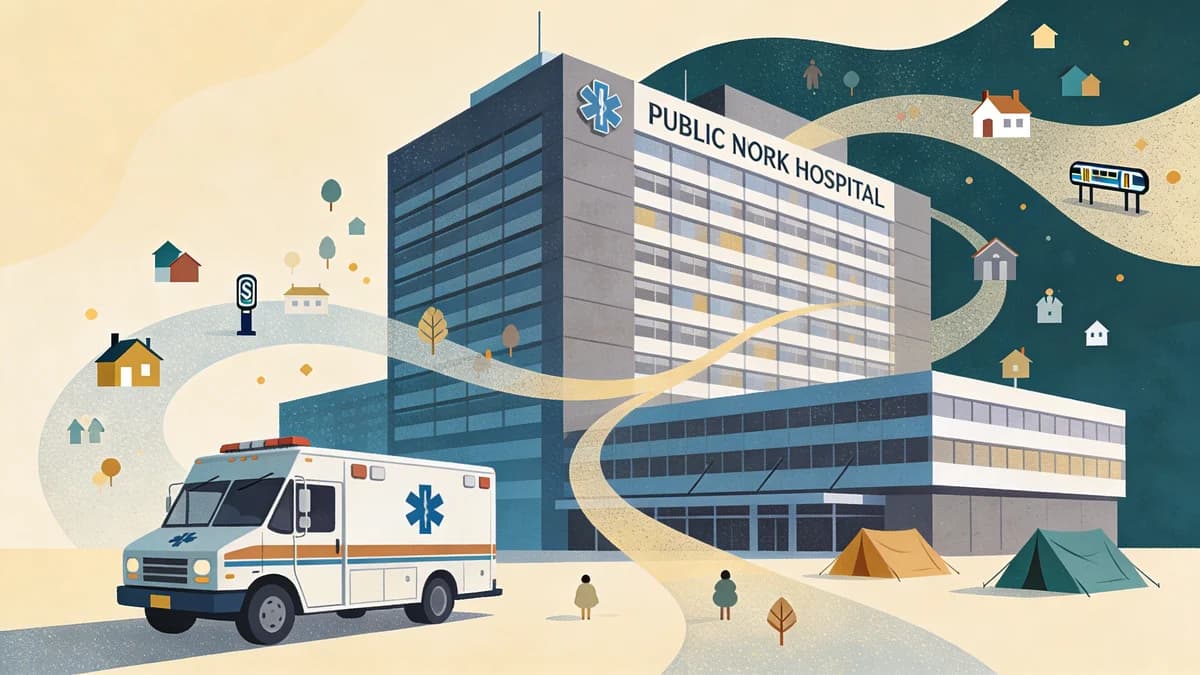
NYC Health + Hospitals, the largest public hospital system in the United States, released its year-two progress report on Monday for a sweeping behavioral health initiative launched in 2024. The numbers tell a story of rapid expansion: medication-assisted treatment caseloads jumped 62% since 2022, mobile street teams connected over 2,300 unhoused New Yorkers to care, and more than 740 emergency room patients got same-day addiction treatment through a pilot bridging program.
The system serves 1.1 million New Yorkers annually across 11 hospitals. Most patients are uninsured or on Medicaid, and many face co-occurring mental health and substance use disorders. This update comes at a pivotal moment—overdose deaths in New York State dropped 32% last year, but the city's street homelessness and untreated addiction remain highly visible policy flashpoints.
What the Blueprint Actually Does
The "Behavioral Health Blueprint: Turning Crisis into Opportunity" is a three-year plan (2024–2027) to rebuild how NYC's public hospitals handle psychiatric emergencies, addiction, and homelessness. It's not just adding beds. The model shifts resources upstream—catching people before they cycle through emergency rooms, jails, or shelters repeatedly.
Year one focused on staffing and infrastructure. Year two put those hires to work: mobile teams, crisis centers, and medication programs all scaled up. The blueprint spans six major initiatives, each targeting a different bottleneck in the system.
Street Teams Reached 2,300 People Who Weren't Seeking Help
The Street Health Outreach and Wellness (SHOW) program launched in May 2025 with 14 mobile units. Teams include behavioral health clinicians, peer counselors, and nurses. They don't wait for people to come in—they go out to encampments, subway stations, and known gathering spots.
Between May and December 2025, SHOW teams made contact with 2,376 individuals. Twenty of those people entered residential or intensive outpatient treatment directly from the street. Another 185 stayed engaged with ongoing case management or medication follow-up. Those numbers might sound modest, but this population has historically been the hardest to reach. Many have histories of involuntary psychiatric holds, arrests, or evictions from shelters—experiences that erode trust in institutions.
Each team carries Narcan, wound care supplies, and portable drug testing kits. They offer immediate medical attention, mental health screening, and referrals to housing programs. The city budgeted $9.2 million for SHOW in fiscal year 2026.
Emergency Rooms Now Start Addiction Treatment On-Site
The BRIDGE program (Behavioral Rehabilitation and Integrated Discharge for the Emergency Department) targets a specific problem: people who show up in crisis but leave without any plan. Historically, ER doctors could assess substance use disorder and refer patients to clinics—but appointments might be weeks away, and most people never showed up.
BRIDGE changes that. Patients identified with opioid or alcohol use disorder get their first dose of medication before they leave the ER: long-acting injectable buprenorphine (Sublocade) for opioid use disorder, or extended-release naltrexone (Vivitrol) for alcohol or opioid dependence. Clinicians also introduce contingency management, an evidence-based approach that uses small incentives (gift cards, MetroCards) to reinforce treatment attendance and abstinence.
Since the pilot began, 740 patients have gone through BRIDGE. Historically, only about 10% of ER patients with substance use disorder ever made it to a first outpatient appointment. Early data from the program—full results expected later this year—suggest the no-show rate drops significantly when medication starts immediately and the next appointment is booked in-person before discharge.
The BRIDGE model draws on research showing that long-acting medications remove daily adherence barriers (no pills to remember or lose), and contingency management addresses the motivational challenges early in recovery. NYC Health + Hospitals is now expanding BRIDGE to four more emergency departments citywide.
What Contingency Management Actually Means
Contingency management has strong evidence behind it, especially for stimulant use disorder, where no FDA-approved medications exist. The idea is simple: behavior change happens faster when it's rewarded immediately. Patients earn small incentives—typically $5–$25 gift cards—for verified negative drug tests, attending counseling sessions, or completing treatment milestones.
It's not bribery; it's behavioral economics. Studies show CM doubles the rate of abstinence during treatment compared to counseling alone. A 2025 New York State health technology assessment reviewed 37 randomized trials and found consistent benefits, particularly for cocaine and methamphetamine use.
But CM has been slow to spread. It requires infrastructure: frequent testing, real-time results, tracking systems, and flexible budgets. Some providers worry about the ethics of paying patients, though research shows participants don't view it as transactional—they describe it as recognition and validation during a period when everything else in their lives feels unstable.
NYC Health + Hospitals is one of the first large public systems to embed CM into routine emergency-based care. If it works here—amid the chaos of a city ER—it could become a template for other safety-net hospitals nationwide.
5,200 Patients on Medication-Assisted Treatment
Medication-assisted treatment (MAT)—using buprenorphine, methadone, or naltrexone alongside counseling—is the gold standard for opioid use disorder. Yet access remains uneven. Many patients face long waits for methadone clinics, and some doctors still hesitate to prescribe buprenorphine due to outdated stigma or lack of training.
NYC Health + Hospitals treated 5,200 patients with MAT in year two of the blueprint, up from 4,400 in year one and 3,200 in 2022. That's a 62% increase in two years. The system added prescribers at primary care sites and embedded addiction specialists into emergency departments, making it easier for patients to start treatment wherever they first make contact with the system.
The expansion also reflects policy changes. Federal rules dropped the X-waiver requirement in 2023, allowing any licensed clinician to prescribe buprenorphine without special training. New York State is piloting Medicaid coverage for long-acting injectables in non-specialty settings, reducing the administrative burden on providers.
MAT saves lives. Multiple studies show it cuts overdose death risk by 50% or more compared to abstinence-only approaches. But medications alone aren't enough. The blueprint pairs MAT with housing support, peer counselors, and contingency management to address the broader instability that drives relapse.
Crisis Centers Diverted 1,800 People From Emergency Rooms
Behavioral Health Crisis Centers (BHCCs) offer an alternative to 911 and emergency rooms for people experiencing psychiatric crises without life-threatening medical emergencies. They're walk-in facilities staffed by clinicians trained in de-escalation, crisis counseling, and rapid psychiatric assessment.
Since opening, the two pilot BHCCs in the Bronx and Brooklyn logged 1,800 visits. Average stay: four hours. Most patients were stabilized and connected to outpatient follow-up the same day. A smaller group needed hospital-level care and were transferred to psychiatric emergency departments.
The goal isn't just to reduce ER crowding—though that helps. It's to create a less coercive, less clinical space where people in crisis can get help without handcuffs, restraints, or involuntary holds. Crisis centers also serve as entry points for people who wouldn't have sought help otherwise. About 30% of BHCC visitors had no prior connection to the health system.
NYC plans to open three more crisis centers by 2027, with $18 million allocated in the current budget.
Why This Matters Beyond New York City
NYC Health + Hospitals isn't operating in a vacuum. Cities and states nationwide are rethinking addiction and mental health infrastructure post-pandemic. Federal block grants from SAMHSA have increased, opioid settlement dollars are flowing to local governments, and Medicaid is expanding coverage for evidence-based treatments like contingency management.
But money doesn't automatically translate into better care. The blueprint's value lies in its specificity: clear metrics, named programs, budgeted line items, and public progress reports. That transparency makes it easier to see what works, what doesn't, and where bottlenecks persist.
Mobile street teams and emergency-based medication induction aren't new ideas. What's new is deploying them at scale in a public hospital system that treats some of the city's most marginalized residents. If the model succeeds, it offers a roadmap for other large safety-net systems facing similar challenges.
Year three begins in June 2026. The final report will include retention rates, overdose outcomes, and cost-effectiveness data. Until then, the numbers suggest the system is moving in the right direction—slowly, imperfectly, but measurably.
Written by
MTNYC Editorial TeamThe MTNYC Editorial Team is a group of healthcare writers, researchers, and addiction specialists dedicated to providing accurate, compassionate, and evidence-based information about addiction treatment and recovery resources in New York State.