NYC Honors Public Health Worker Behind Naloxone Vending Machines That Distributed 4,500 Overdose Kits
Roxanne Anderson of NYC's Department of Health won the Hayes Innovation Prize for implementing public health vending machines that have been used over 42,000 times since 2023.
New York City honored a dozen public servants Tuesday night for projects that modernize city services and improve public safety. Among the winners: a Department of Health official who brought naloxone vending machines to communities across the city—and saw them used more than 42,000 times in less than three years.
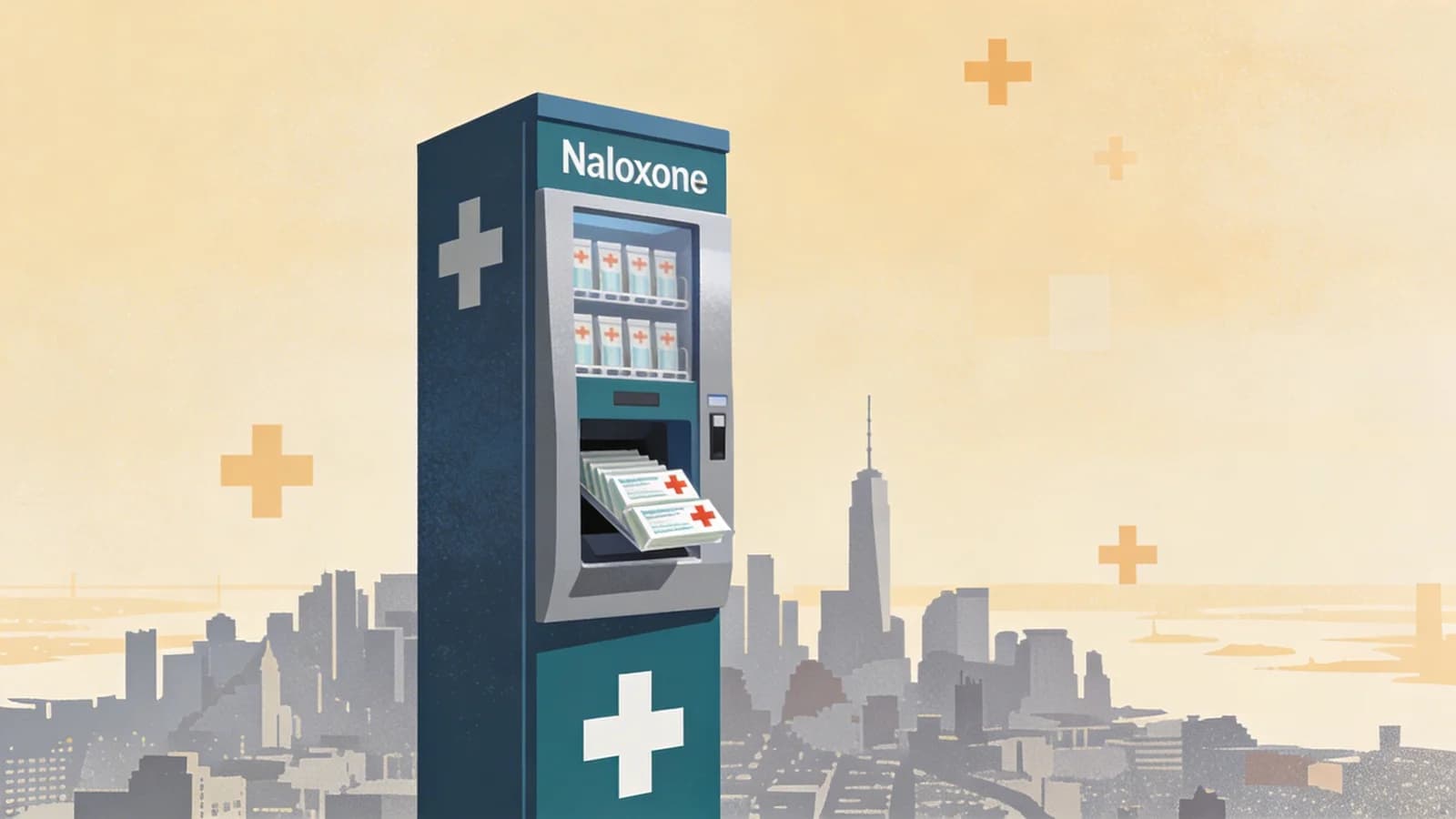
Roxanne Anderson of the Department of Health and Mental Hygiene received the fourth annual NYC Hayes Innovation Prize for implementing public health vending machines that dispense free naloxone, sterile syringes, sharps containers, and other harm reduction supplies. Since launching in June 2023, the city's first four machines have distributed 4,500 naloxone kits and tens of thousands of other resources.
The machines are part of the city's effort to reduce barriers to overdose prevention tools. They operate 24/7, require no ID or prescription, and offer supplies in neighborhoods where access to pharmacies or treatment programs can be limited. According to city officials, the program addresses both stigma and logistics—two major barriers that prevent people from accessing life-saving resources.
"There is no challenge too big for New York City's amazing public servants," said Chief Technology Officer Lisa Gelobter. "Thanks to their bold vision and leadership, this year's Hayes Prize winners achieved remarkable results that made our city more affordable, our government run better, and our streets safer for New Yorkers."
One Innovation Among Many
The Hayes Innovation Prize recognizes city employees who develop practical solutions to complex problems. This year's winners were selected from 74 nominations across more than 30 agencies. Each received a $1,000 cash prize funded by the Frederick O'Reilly Hayes Prize Foundation.
Other honorees included Joel Owhe of the FDNY, who created a digital job safety analysis tool to improve firefighter training and safety, and Pavel Ilin of the Mayor's Office for Economic Opportunity, who led the rebuild of My File NYC, a platform where residents can securely store vital documents.
Mayor Zohran Mamdani, who presided over the ceremony, praised the winners for embodying "public excellence—not as an abstract ideal, but as daily work in service of 8.5 million New Yorkers."
Why Vending Machines Matter
Overdose deaths remain a leading cause of death in New York City. While the city has made progress—reporting a 32% drop in overdose fatalities in 2025—naloxone access is still uneven. Not all pharmacies stock it, some require a prescription despite state standing orders, and stigma keeps people from asking.
Vending machines solve for anonymity and availability. They're stocked in high-need neighborhoods, accessible at any hour, and designed to normalize harm reduction the same way pharmacies normalize first aid kits.
The program builds on New York's broader naloxone distribution network, which includes over 300 Opioid Overdose Prevention Programs (OOPPs) and a statewide standing order that allows anyone to get naloxone without a prescription. The city also operates Narcan Behind Every Bar, an initiative that brings naloxone to nightlife venues.
Since the first vending machine launched in Brooklyn in 2023, the city has expanded the program. Additional machines have been placed in other boroughs, and officials have signaled plans to continue scaling the initiative based on usage data and community demand.
Naloxone is a safe, non-addictive medication that reverses opioid overdoses. It works by blocking opioid receptors in the brain and can restore normal breathing within minutes. While it won't reverse overdoses caused by non-opioids, it has no harmful effects if given to someone who hasn't taken opioids.
The vending machines also stock fentanyl test strips, safer-sex kits, and wound care supplies—part of a broader harm reduction strategy that meets people where they are, without requiring abstinence or enrollment in treatment.
Anderson's work reflects a shift in public health thinking: remove barriers first, connect people to care second. The machines don't ask questions. They don't require appointments. They don't judge. They just work.
And according to the city's numbers, they're working often.
Written by
MTNYC Editorial TeamThe MTNYC Editorial Team is a group of healthcare writers, researchers, and addiction specialists dedicated to providing accurate, compassionate, and evidence-based information about addiction treatment and recovery resources in New York State.