RFK Jr. Wants to Transform U.S. Addiction Treatment Using a Controversial Italian Model
Health Secretary Robert F. Kennedy Jr. is pushing abstinence-based farm camps modeled after an Italian program. Experts warn the approach could increase overdose deaths.

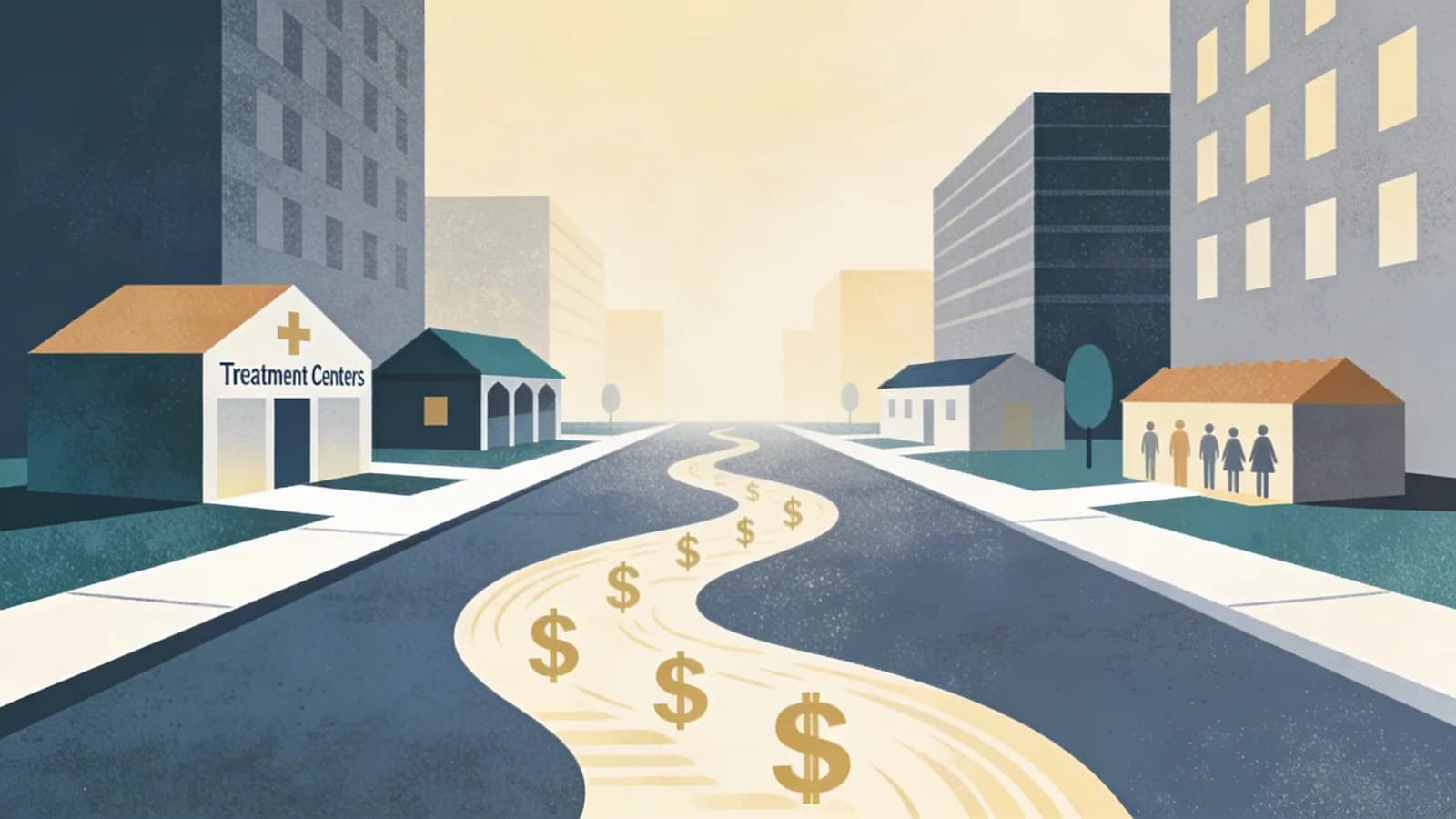
Health and Human Services Secretary Robert F. Kennedy Jr. is proposing a sweeping overhaul of American addiction treatment policy, centered on a model he discovered during his 2024 presidential campaign: an Italian farm community called San Patrignano where residents work, live, and recover without medication.
Kennedy, who has spoken openly about his own heroin use spanning more than a decade, says the approach helped him achieve sobriety. Now he wants to bring that model to the United States through the "Great American Recovery Initiative," a $100 million federal program that includes plans for wellness farms offering abstinence-based treatment.
But addiction experts and medical researchers are raising alarms. The Italian program Kennedy champions rejects scientifically proven medications like buprenorphine and methadone that have decades of evidence showing they reduce overdose deaths. For a nation still losing tens of thousands of people annually to fentanyl, critics say Kennedy's vision could make the crisis worse.
What Is San Patrignano?
San Patrignano sits on rolling hills above Italy's Adriatic coast, surrounded by vineyards, workshops, and farmland. It is undeniably beautiful. The community houses roughly 1,200 people—mostly adult men—who work in agriculture, artisan crafts, and food production while undergoing a four-year recovery program.
The facility has gained international attention for its approach: no pharmaceutical medications, no formal therapy sessions, no doctors in white coats. Instead, residents are expected to rebuild their lives through manual labor, community living, and what the organization calls "rebuilding your own biography."
"They are not patients. They are not clients," Monica Barzanti of San Patrignano told NPR. "Nobody can cure you. You have to rebuild your own biography."
Kennedy has repeatedly cited San Patrignano as his inspiration for transforming American addiction care. During a 2024 interview on the NewsNation network, he described seeing "2,000 kids who work on a large farm in a healing center." He has suggested similar camps in the U.S. could serve as places where people recover not just from addiction but from anxiety and depression medication use as well.
The "Reparenting" Controversy
Kennedy's advocacy for the Italian model has drawn sharp criticism following the resurfacing of 2024 recordings in which he discussed using such camps to "reparent" children. During a congressional hearing last week, Senator Angela Alsobrooks, Democrat of Maryland, pressed Kennedy on the comments.
"You said every Black kid can get reparented on a wellness farm," Alsobrooks said. "Can you admit that you said that?"
Kennedy initially denied making the statement. But HHS later confirmed to NPR that Kennedy had indeed raised the concept of reparenting, while claiming he was taken out of context and referring to a psychotherapy practice.
The recordings, however, tell a different story. In a 2024 podcast interview with "High Level Conversations," Kennedy explicitly tied the reparenting concept to the San Patrignano-style farm camps.
"Those kids are going to have a chance to go somewhere and get reparented, to live in a community," he said.
There are factual problems with Kennedy's portrayal beyond the reparenting issue. San Patrignano leaders told NPR they have no record of Kennedy ever visiting or contacting them. The community is significantly smaller than the 2,000 residents Kennedy has described. And contrary to his framing, it is not a program for children—the vast majority of participants are adult men.
Why Experts Are Concerned
The scientific consensus on opioid addiction treatment is clear: medications like buprenorphine and methadone reduce mortality by 50% or more compared to abstinence-only approaches. These drugs, known collectively as medication for opioid use disorder (MOUD), work by reducing cravings and withdrawal symptoms without producing the high of opioids like heroin or fentanyl.
San Patrignano rejects all of them.
For people addicted to fentanyl—the synthetic opioid driving the vast majority of overdose deaths in the U.S.—abstinence programs carry particular risks. When someone stops using opioids entirely, their tolerance drops rapidly. If they relapse and use the same dose they once tolerated, the result is often fatal.
"We know that abstinence-based programs fail over and over again, often very quickly," said Robert Heimer, a researcher at Yale University who studies addiction treatment. "Once their tolerance goes down and they relapse, they're at enormous risk."
Studies consistently show that many fatal overdoses occur shortly after someone completes an abstinence-based program or returns to use after a period of sobriety. In the era of fentanyl, where the drug supply is unpredictable and potent, that risk is magnified.
Policy Changes Already Underway
Kennedy's influence on federal addiction policy is not theoretical. Since taking office as HHS Secretary, his department has already implemented significant changes aligned with his philosophy.
Funding for addiction health research has been cut. Support for harm reduction programs—including services designed to prevent HIV, AIDS, and hepatitis among drug users—has been slashed. SAMHSA, the federal agency overseeing addiction treatment, has issued new guidance restricting harm reduction approaches while emphasizing counseling and abstinence.
The administration has also banned federal funding for fentanyl test strips and syringe services programs, reversing years of bipartisan support for these evidence-based interventions.
Kennedy frames these changes as part of a broader "spiritual renaissance" for people who use drugs. At public appearances, he has emphasized wellness, work, and faith-centered approaches, saying these methods helped him recover from heroin addiction.
What This Means for New York
New York State has been a national leader in medication-assisted treatment, with OASAS funding hundreds of programs offering buprenorphine and methadone across the state. The agency has also supported harm reduction initiatives, including the vending machines that now dispense free naloxone and drug test strips in communities statewide.
Federal policy shifts under Kennedy could pressure New York to change course. Block grants that fund a significant portion of state addiction services come with federal strings. If Washington prioritizes abstinence-based programs over medication-assisted treatment, states like New York may face difficult choices about how to allocate limited resources.
The stakes are measurable. New York saw overdose deaths decline by roughly 32% in 2025, a trend public health officials attribute partly to expanded access to naloxone and medication-assisted treatment. Whether that progress continues may depend, in part, on how aggressively the Kennedy administration pursues its vision of addiction care.
For now, the Italian farm model remains just that—a model. No San Patrignano-style wellness camps have been announced for New York or anywhere else in the U.S. But Kennedy has made clear that he views the current system as broken and the Italian approach as the future.
The question facing policymakers, treatment providers, and families is whether a model designed for a different country, a different drug supply, and a different era can save American lives—or whether it will cost them.
Written by
MTNYC Editorial TeamThe MTNYC Editorial Team is a group of healthcare writers, researchers, and addiction specialists dedicated to providing accurate, compassionate, and evidence-based information about addiction treatment and recovery resources in New York State.