New York Is Sending Peer Specialists Into Arraignment Court
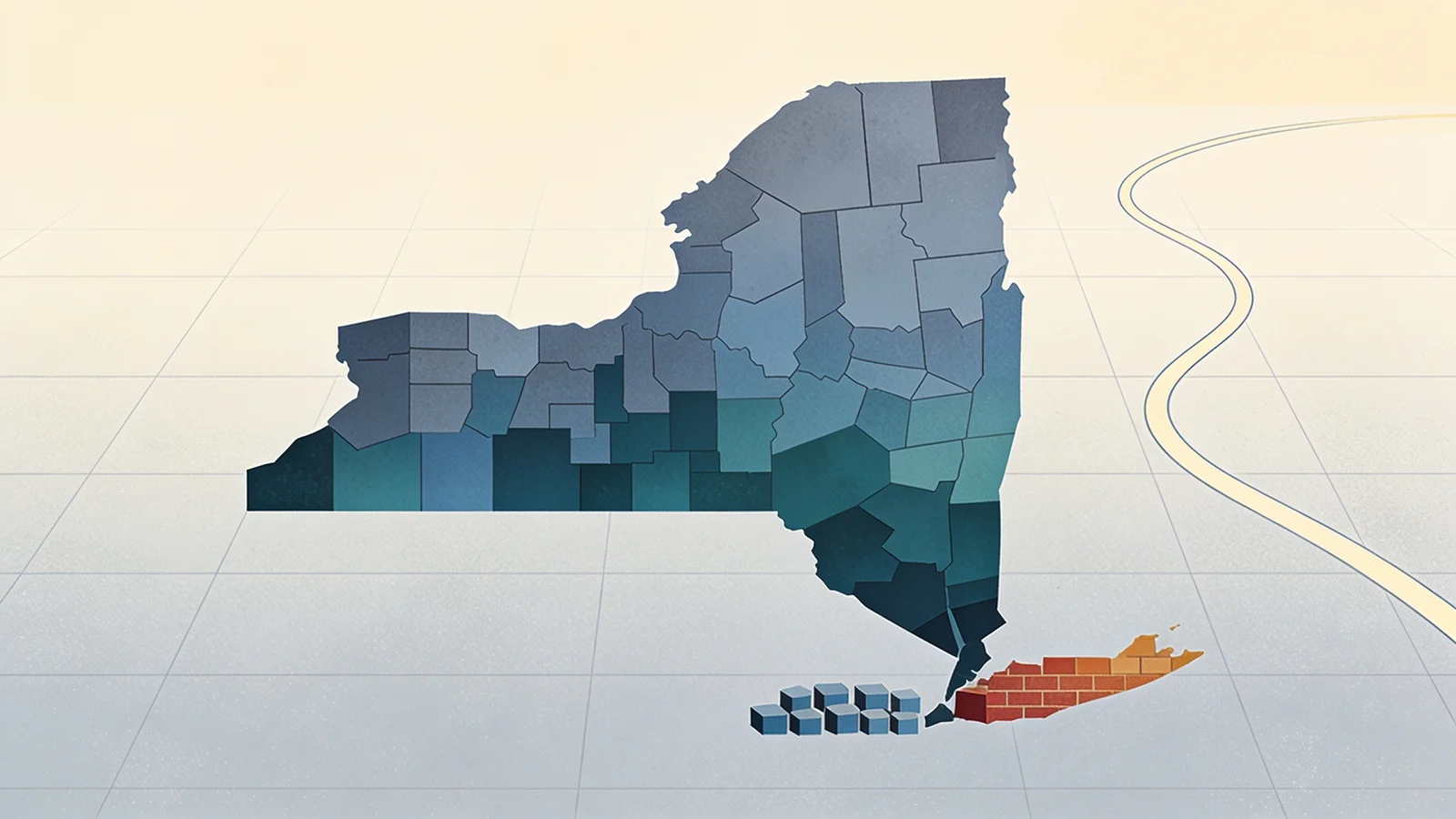
Three nonprofits will split $2.4 million to put peer specialists in arraignment courts and rural jails across Cayuga, Oneida, Warren and Washington counties.

Arraignment in Cayuga County takes minutes. A judge reads the charges, sets bail or releases the defendant on their own recognizance, and the room moves on to the next case. Somewhere in that squeeze of an afternoon, a person who uses drugs or lives with untreated mental illness either gets a court date and a bus schedule or gets a cell.
Starting this month, one more thing can happen inside that window. A peer specialist — someone hired partly because they have been through treatment themselves — can be standing in the room with a list of open beds and a phone number for a clinic that takes Medicaid.
The state Office of Mental Health named the organizations that will do this work on Monday. Nick's Ride 4 Friends in Auburn will receive $600,000 over three years to hire three peer specialists, one of them part-time, and put them in centralized arraignment courts and the Cayuga County Jail. Helio Health gets the same amount over the same period for two peer specialists working rural courts in Oneida County. ASCEND Mental Wellness receives two grants totaling $1.2 million to expand its Law Enforcement Addiction and Mental Health Referral System in Warren and Washington counties. Together the three awards come to $2.4 million, and the state describes them as one program across four counties.
What the money buys
The job description matters more than the dollar figure. These are not clinicians, and they are not case managers who carry 90 files. They are people whose qualification is lived experience plus a state credential, assigned to find the narrow opening between an arrest and a jail booking.
| Organization | County or counties | Award | Staff being hired |
|---|---|---|---|
| Nick's Ride 4 Friends | Cayuga | $600,000 over 3 years | One part-time and two full-time peer specialists |
| Helio Health | Oneida | $600,000 over 3 years | Two peer specialists for rural courts |
| ASCEND Mental Wellness | Warren, Washington | $1.2 million over 3 years, two grants | Expansion of an existing law enforcement referral system |
Nick's Ride 4 Friends will focus on adults 18 and older with complex or chronic behavioral health conditions who have been through the criminal justice system before, according to the Finger Lakes Daily News account of the announcement. The peer specialists are expected to make connections at arraignment, keep them alive through pretrial appearances, and stay in contact when someone is released from the county jail.
That last part is the part that is hardest to fund and hardest to measure. Reentry coordination usually stops when a grant cycle ends or when a client misses a court date in a county with no public transit.
Three years, two and a half salaries
Divide $600,000 by three years and you get $200,000 a year for the Cayuga program, which has to cover two and a half positions plus supervision, training, mileage between Auburn and the surrounding towns, and the administrative overhead any nonprofit carries. It is a realistic budget and a thin one. Peer specialist pay in upstate New York is not high enough to keep people in the role for a decade, and the people best at the job are often the ones with the most fragile housing and the newest recovery.
The state's own reasoning for spending the money this way is that timing beats intensity. A treatment slot offered in the third week of a jail stay competes with everything that happens in the first three days of withdrawal and fear. A treatment slot offered in the first hour after arrest competes with almost nothing.
Why arraignment is the hinge
The federal government's own research summary on criminal justice populations puts the scale in plain numbers: an estimated 65 percent of the people in American prisons have an active substance use disorder, and another 20 percent were under the influence of drugs or alcohol at the time of their offense. The National Institute on Drug Abuse is equally direct about what happens on the way out. People leave jail with tolerance worn down by weeks or months of abstinence, return to the dose they used before, and die at higher rates than they did while inside, as NIDA's criminal justice DrugFacts lays out.
Medications in and out of jail
Medications for opioid use disorder change that curve. NIDA's review of the research finds that providing methadone or buprenorphine in correctional settings lowers post-release overdose deaths, and it recommends naloxone distribution in diversion programs specifically. What it does not say — because the research cannot — is how many county jails in New York do this consistently. A peer specialist walking into a jail that offers no medication for opioid use disorder can arrange a warm handoff to a clinic at release. That is a real service. It is not the same thing as continuing treatment on day one.
New York has been building the rest of the pipeline for years. The Office of Mental Health funds Intensive and Sustained Engagement Teams, which are peer-led and voluntary; a forensic version aimed at people cycling through courts and jails; and 16 Forensic Assertive Community Treatment teams, with four more in development. Commissioner Ann Sullivan has argued in print that well-timed diversion reduces the need for arrest and incarceration in the first place, noting that admissions to the state's civil psychiatric centers increasingly involve people with legal system history and that close to 10,000 adults in state prison receive Office of Mental Health services behind the wall.
Seventy-one navigators, thirteen programs
Monday's awards sit inside a larger stack that is rarely described in one place. New York supports 13 jail diversion programs that handle crisis stabilization, care management, discharge planning and reentry, and those programs reported serving roughly 3,000 people in 2025 while diverting 1,350 of them from incarceration or hospitalization. Separately, 71 court-based mental health navigators work in 40 counties, including New York City, at a cost of $7.8 million. The 2025 state budget added $9.3 million in Judiciary funding that pays for 86 additional full-time positions in mental health courts.
Court-based navigators are the closest cousin to what Cayuga and Oneida are getting. The state's early read on them, published in October, is that about three-quarters of the people referred accepted the offer and stayed engaged for at least a month on average. That is a better acceptance rate than most voluntary outpatient programs report for a population in crisis, and it is a low bar. Staying engaged for a month is not the same as being in treatment in month six, and neither figure has been audited by anyone outside the agency that funds it.
What the local death data shows
The counties receiving this money have all seen their overdose deaths fall from the peak, which makes the timing awkward for anyone arguing that the crisis has passed. The most recent twelve-month window in the Centers for Disease Control and Prevention's provisional county file, ending March 31, 2026, shows declines almost everywhere in the state — and still leaves a body count in the counties receiving the money.
| County | 12 months ending March 31, 2025 | 12 months ending March 31, 2026 | Records pending investigation |
|---|---|---|---|
| Cayuga | 15 | 10 | 12% |
| Oneida | 46 | 39 | 0% |
| Warren | Suppressed | Suppressed | 72% |
| Washington | Suppressed | Suppressed | 39% |
Two caveats belong next to that table. The CDC file suppresses counts between one and nine for privacy, which is why Warren and Washington show nothing at all — in counties that size, a handful of deaths is the difference between a trend and noise. And in Warren, nearly three-quarters of the records for the most recent window were still pending investigation, which means the number will move when coroners finish their work. Anyone who tells you they know the direction of overdose deaths in a small North Country county right now is guessing.
The part no grant covers
A peer specialist can only divert someone to a bed that exists. Upstate counties have fewer prescribers of buprenorphine per capita than New York City, thinner outpatient networks, and long drives between the jail, the clinic, and the courthouse. Warren and Washington are getting a referral system, not new treatment capacity.
The three-year problem
There is also the question of what happens after the third year. All three awards run three years, which is long enough to hire and train staff and short enough to end before the outcome data matures. The state has not said how it will measure success — whether it will count arrests avoided, treatment retention at 90 days, or simply referrals made. The difference matters. A program judged on referrals will produce referrals. A program judged on whether people are still in treatment a year later will have to fight the same capacity problems that put them in arraignment court to begin with.
For families in Auburn and Utica and the small towns around Glens Falls, the practical question is simpler than any of that. If someone is arrested on a Tuesday and detoxing by Wednesday, will there be a person in the building who knows where the treatment is, and will that person still be there in three years? Monday's announcement answers the first half.
Nick's Ride 4 Friends was founded after Nick Campagnola died in December 2015 at 20, his addiction having started with a sports injury when he was a teenager. The organization has spent a decade running recovery supports in Cayuga County. Now it is being paid to stand in a courtroom and catch people earlier than that.
Written by
MTNYC Editorial TeamThe MTNYC Editorial Team is a group of healthcare writers, researchers, and addiction specialists dedicated to providing accurate, compassionate, and evidence-based information about addiction treatment and recovery resources in New York State.