A Lower East Side Clinic Sues New York Over Revoked Licenses
Lower Eastside Service Center is suing New York to reverse the revocation of its methadone and outpatient licenses, saying 500 patients could lose care.
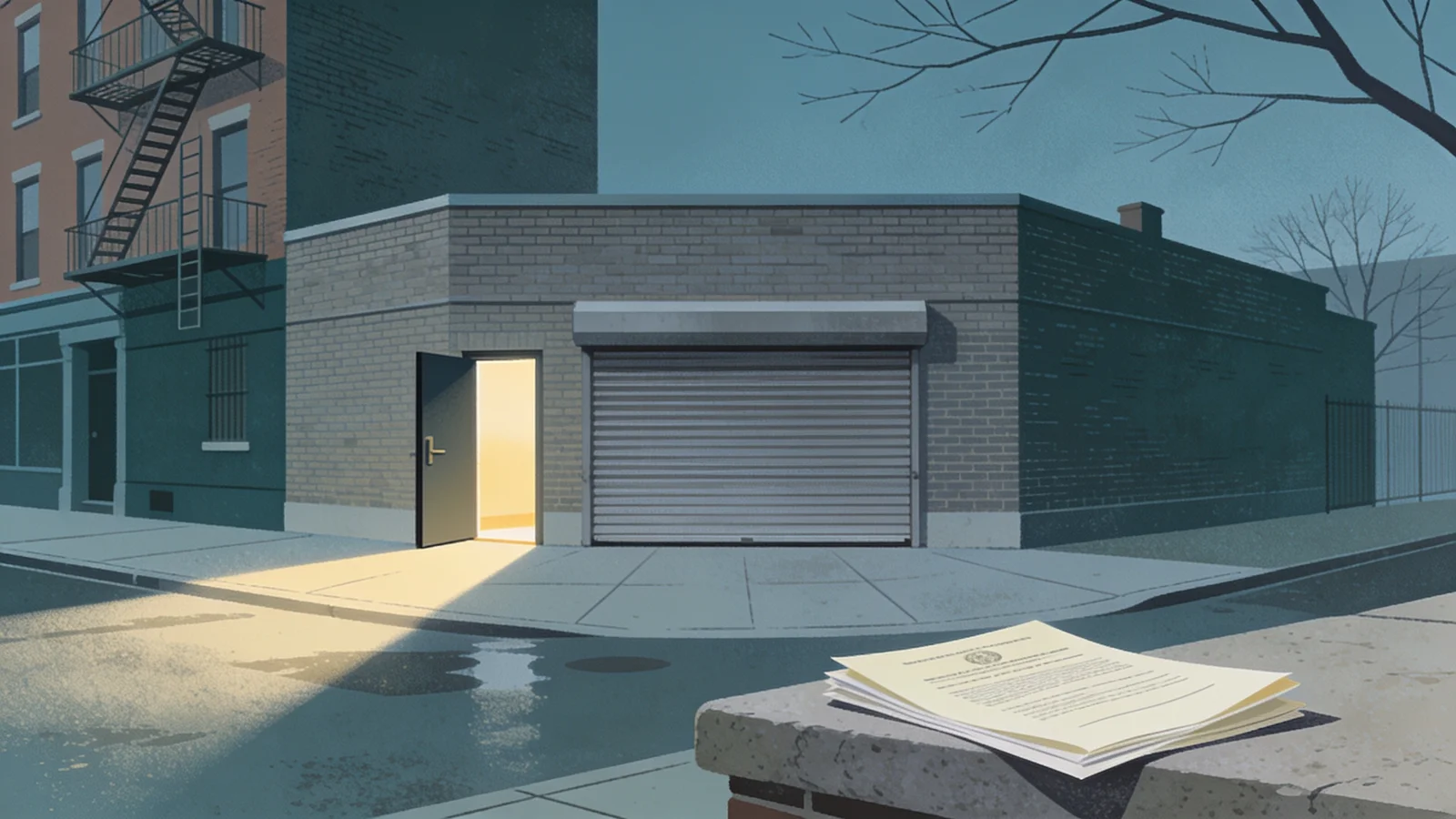
The two clinics at 46 and 62 East Broadway have been dark since March. On a Friday that month, Lower Eastside Service Center posted a notice blaming a freezing snowstorm for water damage and sent its patients to dose at four other Manhattan clinics. Nobody at the time mentioned licensing.
Eight months later, the reason for the silence looks different. On November 16, Crain's New York Business reported that the state had revoked LESC's methadone and outpatient treatment licenses, and that the nonprofit is now suing New York to get them back. The organization says the revocation cuts off care for 500 patients.
Neither the state nor LESC has explained publicly why the licenses were pulled. Crain's, which broke the story, did not report the grounds. OASAS has posted nothing about the action on its news page, and LESC's own site still frames the East Broadway closures as temporary storm repairs rather than a regulatory fight.
What is not in dispute is the arithmetic. A provider that has operated in the neighborhood since 1959, one of the longest-running addiction treatment agencies in the city, is now in litigation with the agency that certifies it, over the licenses that let it dispense methadone to roughly five hundred people.
What a Revoked License Actually Means
New York does not license addiction treatment the way it licenses a restaurant. Under Article 32 of the Mental Hygiene Law, a provider needs an operating certificate from OASAS before it can deliver chemical dependence services at all. The certificate is program-specific: an opioid treatment program dispensing methadone holds a different certificate than an outpatient clinic offering counseling, and both differ from the residential certificates that cover LESC's Su Casa program on the Lower East Side.
Revocation is governed by Section 32.21, which allows the commissioner to revoke, suspend, or limit a certificate on a finding that the holder failed to comply with the terms of the certificate or with any applicable statute, rule, or regulation. The same section gives the holder a right to notice and an opportunity to be heard before that determination is made, and it caps fines at one thousand dollars per finding — a figure that has not been adjusted in decades and reads as almost symbolic next to the operating budgets involved.
There is also an emergency lane. Section 32.21(f) lets the commissioner suspend a certificate for up to thirty days on written notice, without a prior hearing, if there are reasonable grounds to find that continued operation presents an immediate danger to the public or to patients. Nothing in the public record indicates that provision was used here. A revocation, as opposed to an emergency suspension, is supposed to arrive after a hearing under Section 32.23, which requires the proceeding to be held without undue delay, gives the provider the right to counsel, to present evidence, and to cross-examine, and requires the commissioner to issue a determination within ten business days of the hearing or of the hearing officer's report.
Whether that sequence ran, and whether LESC is challenging the substance of the findings or the procedure that produced them, is exactly what the lawsuit will establish. The organization has not released the petition.
A Closure That Began With Weather
The timing matters because the clinics were already not seeing patients when the licenses were revoked. LESC's notice of temporary closure, dated March 12, 2026, attributes the shutdown entirely to storm damage and says the organization is "working diligently to relocate to a temporary space in the same area." It lists guest dosing arrangements at four other Manhattan programs and notes that counseling and case management may continue by phone.
For a methadone patient, that list is the practical content of the story. Daily dispensing is not a convenience issue; it is the treatment. When a clinic closes, patients are expected to present at another program, often before work, with identification and clinic paperwork in hand.
Guest dosing, in practice
| Guest dosing site | Address | Weekday hours | Saturday |
|---|---|---|---|
| Lafayette Medical | 233 Lafayette St. | 6:30 AM – 3:00 PM | 8:00 AM – 12:00 PM |
| MSBI Gouverneur Clinic | 109–11 Delancey St. | 7:00 AM – 1:30 PM | 7:30 – 10:30 AM |
| Greenwich House | 190 Mercer St. | 6:30 AM – 12:45 PM | 8:45 – 11:45 AM |
| West Midtown Medical | 311 West 35th St. | 7:00 AM – 2:30 PM | 7:00 – 11:30 AM |
Three of the four are within walking distance of East Broadway. The fourth, on West 35th Street, is a crosstown trip. All four close by mid-afternoon, which means a patient working a day shift either doses before it starts or not at all — a constraint that shapes adherence far more than any counseling schedule.
The notice gives direct lines for two staff members and a main number, 212-566-5372, plus a message line at 866-802-3114 with a promise of a callback within a day. It does not say when the clinics will reopen, whether the site will be rebuilt, or what patients should expect if the licenses are not restored. As of this week, the banner at the top of every page on LESC's website still reads that the two clinics are temporarily closed.
Five Hundred Patients and a Directory
The state's answer to a closure is a search tool. OASAS maintains an online directory of certified outpatient and bedded programs that anyone can filter by county and service type, and it is the same resource the city's overdose prevention materials point to. What a directory cannot do is create an open slot at 6:30 in the morning. The listings show which organizations hold certificates and where they sit; they do not show whether a program has room, how long its intake queue runs, or whether it will take a transfer in the middle of treatment.
That gap is where Article 32 provides a mechanism few patients know about. Section 32.20 allows the commissioner to appoint a temporary operator — an OASAS staff member or another qualified entity — to run a program on an interim basis when the existing operator cannot, including in cases of serious financial instability or conditions that jeopardize continued access to services. It was written for exactly the scenario in which a licensed program stops functioning but the need in the neighborhood does not.
Nothing in the public record indicates it has been invoked at East Broadway. OASAS has also not said whether the certificates are revoked outright or suspended during litigation, a distinction that determines whether the clinics could dispense again the day a judge rules.
Why 500 Patients Is a Neighborhood Problem
The Lower East Side has never lacked treatment capacity in the abstract, and Manhattan offers dozens of certified programs. But the neighborhood's need is not abstract either. New York City recorded 2,192 unintentional drug poisoning deaths in 2024, a rate of 31.7 per 100,000 residents and a 28 percent decline from the year before, according to the Health Department's Data Brief No. 150. Seventy-eight percent of those deaths involved an opioid. A decline of that size is the product of naloxone saturation, treatment expansion, and programs that stay open — which is why the disappearance of a long-established dispensary in a high-burden area draws attention out of proportion to its patient count.
The footprint beyond those five hundred patients is larger than two clinics suggests. LESC runs an outpatient maintenance clinic with early and late schedules, dispenses both methadone and buprenorphine, operates the Su Casa residential program, and provides supportive housing in Manhattan and the Bronx. The revocation covers only the methadone and outpatient certificates, so it would not close the residential side — but it removes the referral pipeline that feeds it.
The address is the other part of the story. LESC dates to 1959, when it was formed as the Lower Eastside Information and Service Center for Narcotic Addiction; its own timeline, as reported by Hoodline, records a first outpatient detoxification clinic using Dolophine — the brand name for methadone — in 1960, and the opening of 46 East Broadway a year later. Losing a suite in a medical office building is an inconvenience. Losing the site where a neighborhood's methadone treatment started is a different order of event.
The Auditors Already Said the Watching Was Thin
If the revocation is eventually examined in court, the state's inspection record will be part of the backdrop. In December 2021, State Comptroller Thomas DiNapoli issued an audit finding that OASAS did not adequately monitor chemical dependence residential programs and did not meet its own recertification requirements, with many programs continuing to operate after their certificates came due because reviews had not been completed. Follow-up reviews of deficiencies were inconsistent.
The follow-up audit, 2023-F-17, issued in October 2023, found that OASAS had made progress. Two of the three original recommendations were implemented and the third was no longer applicable. The audit also laid out the regulatory geography: residential services run under Part 819 or, after a 2015 redesign, Part 820, which split programs into stabilization, rehabilitation, and reintegration components and expected older Part 819 providers to convert.
The scale in the same document is the part worth holding onto. OASAS oversees roughly 1,700 programs serving more than 680,000 New Yorkers a year, with residential capacity for about 8,000 people. Inspecting a system that size is a permanent staffing problem, and an agency faulted for missing reviews is also the agency asking a court to trust its judgment on a revocation. Both can be true, but a judge will want to see the file.
Where the Case Goes From Here
The lawsuit is a challenge to an administrative determination, which in New York usually means an Article 78 proceeding in State Supreme Court: a review of whether the agency's decision was supported by substantial evidence and reached through the required procedure, not a fresh trial of the facts. Courts defer heavily to agency findings, and providers who win these cases more often win on process — a hearing that was not held, a record that was not disclosed, a determination issued outside the statutory window.
Three outcomes are realistic. The revocation could be annulled and the licenses restored, which would let LESC reopen the East Broadway sites if the buildings are usable. The court could uphold the state, in which case 500 patients need permanent assignments elsewhere and the organization's outpatient and methadone operations in Manhattan end. Or the case could settle into an administrative limbo, with the clinics closed and the licenses in dispute for months while the state's directory quietly absorbs the caseload.
For patients, none of those outcomes changes this week's instructions. Anyone who was dosing at 46 or 62 East Broadway should confirm their current assignment with LESC at 212-566-5372 or 866-802-3114, and anyone who has been turned away from a guest dosing site can locate a certified program through the OASAS directory or reach the state HOPEline at 1-877-846-7369, which takes calls around the clock.
What the case has made visible is narrower and less comfortable than a scandal. A sixty-seven-year-old institution in one of the city's most heavily treated neighborhoods lost its building, then its licenses, and neither event has been publicly explained in full. The petition filed in state court is, for now, the only document that might.
Written by
MTNYC Editorial TeamThe MTNYC Editorial Team is a group of healthcare writers, researchers, and addiction specialists dedicated to providing accurate, compassionate, and evidence-based information about addiction treatment and recovery resources in New York State.